Construction communication guide
Turn a missed call into a useful next step.
A dependable callback process captures who called, which property or project is involved, what they need and who will respond. AI reception can help collect the details; a person still owns the decision.
The short answer
What should a contractor do about missed jobsite calls?
Set up a clear intake message, separate new inquiries from active-project issues, assign each callback to a named person and record the next action. Finish the task in front of you safely before reviewing the message. A transcript or AI summary is an aid to follow-up, not confirmation that a job is accepted, an inspection is scheduled or a change is approved.
This guide applies to general contracting, custom home construction, renovations and specialty trades. The same phone can receive a homeowner’s first inquiry, an electrician’s coordination question, a delivery update and a request from an inspector. Those calls need different responses.
Capture enough to act
A contractor’s missed-call intake checklist
Keep the first exchange short. Ask for the few details that let the right person return the call prepared.

Name and callback number
Ask callers to state their preferred number, even when caller ID is available. Confirm spelling or digits during the callback if the recording is unclear.
Property or project location
Collect the city and a useful project identifier. An existing customer’s property address helps distinguish their job from another project.
Relationship to the project
Is the caller a prospective client, current homeowner, subcontractor, supplier, designer or inspector? Route the message accordingly.
Reason for calling
Request a brief description in the caller’s own words. Avoid turning an initial phone message into a lengthy estimate questionnaire.
Timing and dependencies
Ask whether a delivery, inspection, access issue or another trade’s work depends on the answer. Record a stated deadline without promising it can be met.
Best time to respond
Note the caller’s availability and preferred contact method. Give only a response window the business can actually support.
For a new project in Pinellas County, the actual property location matters. “Near Seminole” is useful context, but it does not establish the permitting jurisdiction. See our Pinellas County permit planning guide for the next stage.
Different callers, different next steps
Prioritize by the consequence of waiting.
| Call type | Useful question | Next action |
|---|---|---|
| New project inquiry | What work is being considered, and where? | Check service fit, clarify scope and arrange the appropriate conversation. |
| Current homeowner | Which project and which decision or concern? | Send to the person responsible for that project; distinguish a question from a requested change. |
| Subcontractor or supplier | What activity, delivery or predecessor task is affected? | Check the project schedule and coordinate the affected parties before confirming instructions. |
| Inspection or access | Which property, permit or inspection, and what needs confirmation? | Verify the details with the responsible project contact or building department. |
An emergency needs an established emergency route, not an unattended lead inbox. For an immediate threat to life or serious danger, use emergency services and the site’s emergency procedures. A caller saying “urgent” should prompt human review; it does not by itself identify the right technical response.
OSHA’s guidance on communication and coordination recommends that employers and contractors share hazard information, responsibilities and emergency arrangements on multiemployer worksites. Routine call intake supports communication, but it does not replace those arrangements or competent supervision.
Inspection-related calls are easier to handle when the team understands what a final inspection involves. Questions about a trade’s qualifications belong in a separate review of Florida subcontractor licensing and exemptions, not an assumption made from a voicemail.
A closed loop
Use a callback process that ends with a recorded outcome.
Check the original message
Read the details and listen when names, numbers, scope or urgency are uncertain. Do not treat a summary as a verified specification.
Name the responder
Give one person responsibility for the callback. Other team members should be able to see who is handling it.
Clarify the request
Repeat the important details and distinguish proposed next steps from confirmed commitments.
Close or schedule follow-up
Record the outcome, who owns the next action and when it is due. Mark a message complete only when its next step is clear.
A simple log can use: received time, caller, project, reason, assigned person, status and next action. Useful statuses include new, assigned, callback attempted, waiting for information and closed. If a call changes scope, price or timing, carry the agreed change into the project’s normal written documentation.
Example: the next trade is waiting
A plumber calls because a planned rough-in location appears to conflict with the current layout. The message identifies the property, the affected area and the work waiting on a decision. The project lead checks the drawings, consults the relevant professionals and communicates the verified direction. The intake system records the question; it does not approve a field redesign.
This is the coordination behind whole-home renovations and structural modifications: the right person needs the right information before dependent work proceeds.
Choose the right intake method
AI receptionist or custom voicemail?
Consider whether callers benefit from guided questions or a familiar recorded message. Test the setup against the calls your business actually receives.
A concise greeting can request a name, callback number, property location and reason for calling. The caller leaves the details in their own words.
Guided questions can organize an inquiry before a person returns the call. Review what the assistant asks and how uncertain or incomplete answers appear.
AnswerCraft’s published workflow offers custom voicemail and conversational AI reception, with messages organized for follow-up. Its setup uses the business’s existing number and a guided phone/carrier activation process. The product describes transcript and audio review in Saved Messages. Confirm current compatibility and setup instructions before activation.
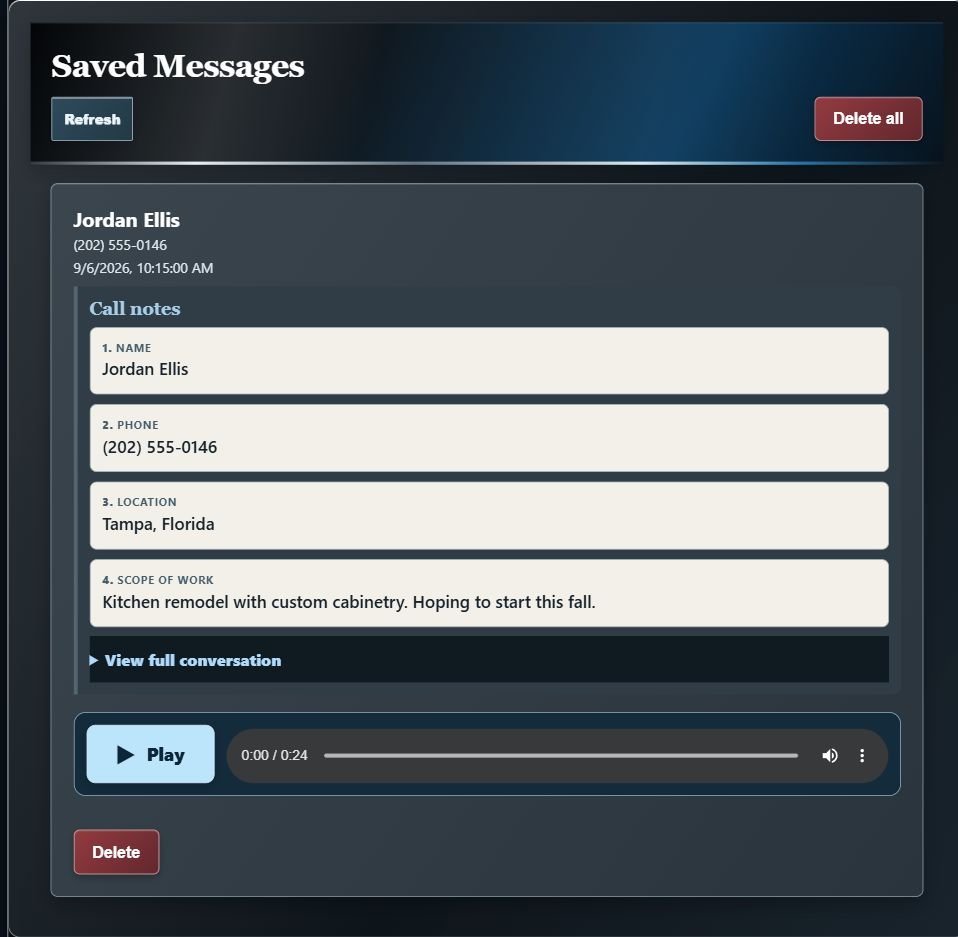
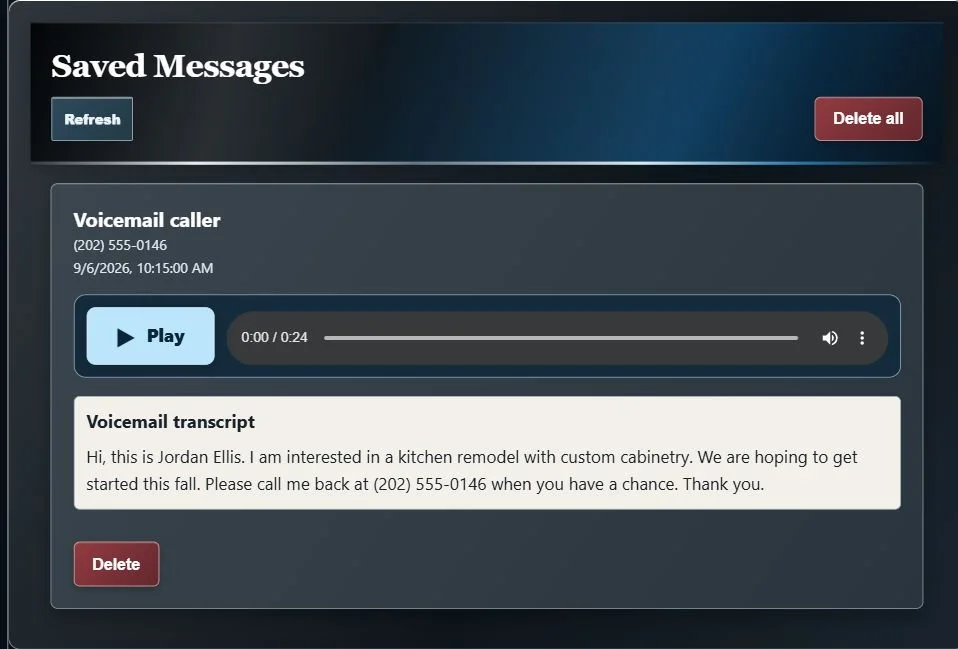
Run an unanswered test call from another phone. Check the greeting, captured number, question order and message delivery. Then test a short message, an unclear project name and a caller who declines extra questions. The business should decide how to handle each case before relying on the setup.
Keep estimates, technical direction, service availability and appointment commitments with an authorized person unless a specific workflow has been configured and verified. For current product details, review the AnswerCraft FAQ.
Common questions
Contractor missed-call questions, answered
Does every missed call mean a lost job?
No. A missed call may be a new lead, a repeat inquiry, a vendor or an existing-project issue. A useful intake and follow-up process reduces uncertainty; it does not guarantee a sale.
Can an AI receptionist replace a project manager?
No. Intake and message organization are different from evaluating construction conditions, coordinating licensed trades, approving changes or making contractual commitments.
Should the caller leave a budget?
A preliminary budget can help during a new-project consultation, but it need not be mandatory in the first missed-call message. Establish the project type and location first, then ask appropriate follow-up questions.
How quickly should a contractor return a call?
Use a realistic response standard for the business and the issue. Time-sensitive active-project matters may need faster review than a new estimate request. State expectations clearly instead of promising an unsupported universal response time.
What belongs in writing after the callback?
Record the agreed next step, responsible person and relevant deadline. Use the project’s normal approval process for changes affecting scope, price, schedule or technical requirements.
From an inquiry to a clear plan
Start your Pinellas County project with the right details.
Tell MDI Custom Homes where the property is, what you want to change or build and your main questions. We can discuss the appropriate next step for your project.
Looking for a better missed-call workflow for your own business? See AnswerCraft’s setup options.