
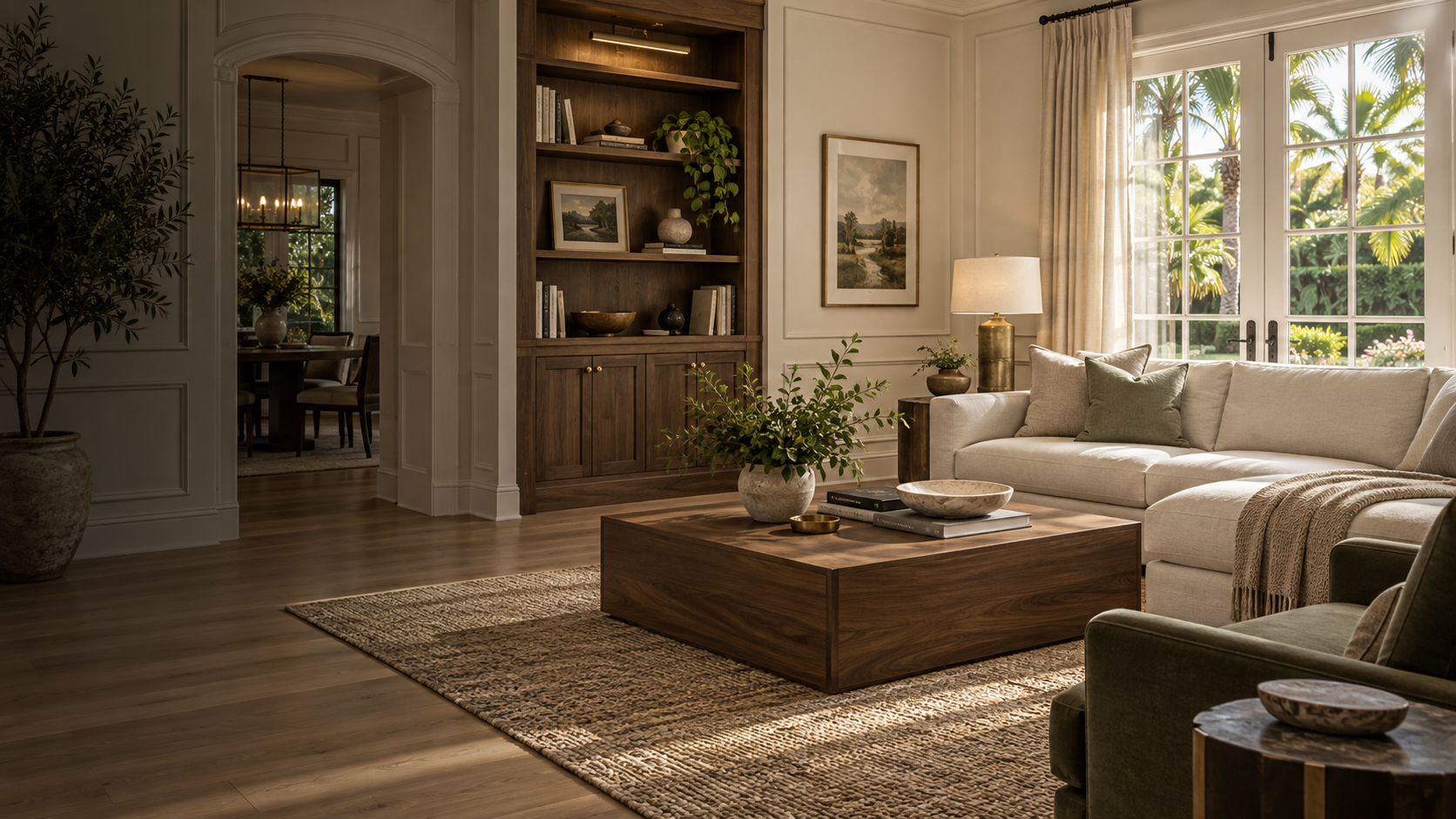
Cosmetic remodeling · Pinellas County
Familiar Spaces.A More Refined Finish.
When the layout works but the details feel dated, a thoughtful finish renovation can change the entire mood. MDI Custom Homes brings materials, surfaces and custom details together with a cohesive remodeling approach.
Florida Certified Building Contractor · CBC1267559
Seminole · Largo · Pinellas County
See your home in a new light
Keep the layout.
Reconsider the details.
Cosmetic remodeling focuses on the surfaces and details you see and touch: paint, flooring, trim, tile, hardware and other interior finishes. It generally retains the existing layout and structural arrangement.
A well-planned update starts with the whole room. We consider how materials, proportions and adjoining spaces work together so the result feels considered from one detail to the next.
Refresh the palette.
Coordinate wall finishes, flooring and trim to create a consistent foundation. Consider undertones, texture and the natural light in each room.
Explore a coordinated whole-home approach →Refine the kitchen.
Consider surfaces, backsplash, hardware and cabinetry as a connected composition. Assess which existing elements are suitable to retain.
Explore kitchen remodeling →Bring detail to the bath.
Plan a coherent combination of vanity finishes, tile, mirrors and hardware, with the underlying condition and actual work carefully considered.
Explore bathroom remodeling →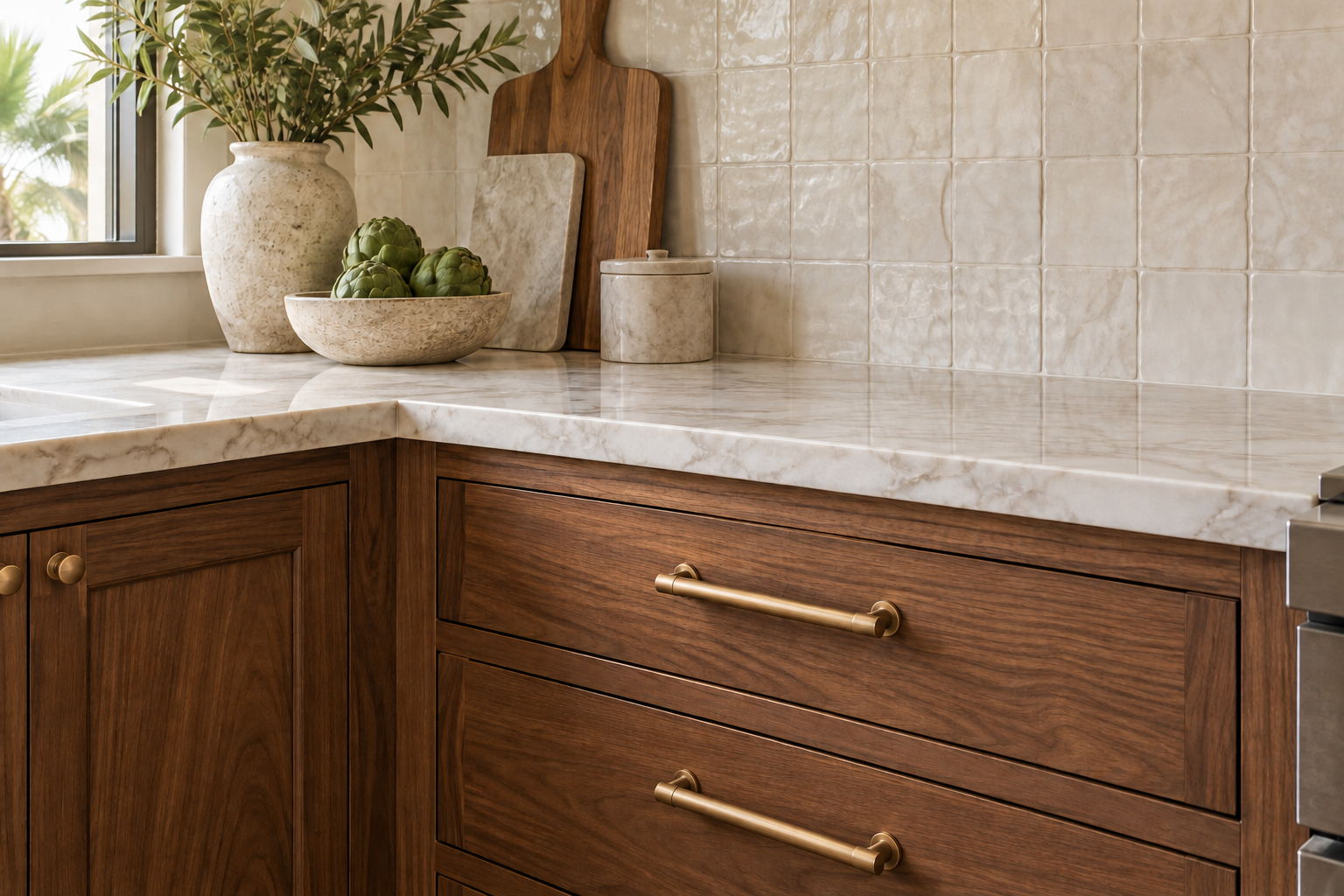
The details make the difference
Materials that belong
in the same conversation.
An individual sample can be beautiful and still feel out of place beside an existing floor or cabinet. We look at the relationships between materials so each choice supports the room.
- Review existing finishes before choosing replacements.
- Coordinate wood tones, stone, tile and metal finishes.
- Consider trim profiles and visible transitions.
- Match the proposed finish to its use and care needs.
A clear scope for a polished result
Thoughtful choices.
Coordinated execution.
Review the rooms
Identify what feels dated, what you want to keep and where a finish update could have the most impact.
Define the work
Review existing surfaces and distinguish finish improvements from any changes affecting structure or building systems.
Coordinate selections
Align materials, colors, dimensions and transitions, with the agreed scope and budget assumptions documented.
Sequence the finishes
Coordinate preparation, installation and final details around the project’s actual scope and existing conditions.
A focused update can feel complete
A quieter palette.
A stronger sense of place.
Refined interiors do not need every surface to compete for attention. A restrained palette, well-proportioned trim and a few carefully chosen materials can give a familiar room a more settled, custom feel.
The scope should fit the home. If worn surfaces conceal moisture damage or other underlying problems, those conditions need attention before a new finish goes over them.
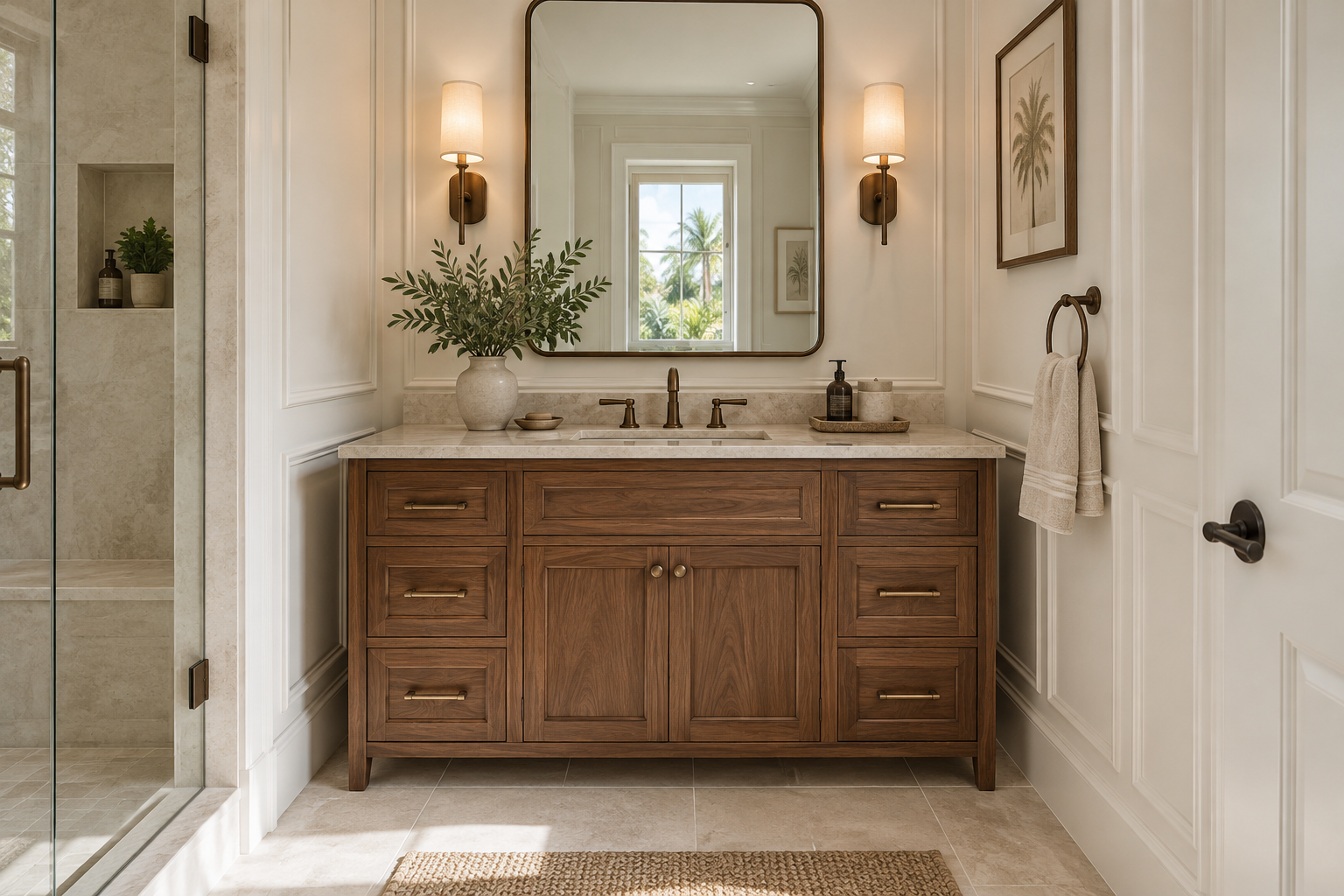
Refined interiors, close to home
Seminole. Largo.
Throughout Pinellas County.
MDI Custom Homes works with homeowners in Seminole, Largo and surrounding Pinellas County communities on high-end remodeling and custom improvements. Finish updates can be a focused project or the final layer of a larger renovation.
Send a few room photos, tell us what you want to retain and share the changes you have in mind. We can discuss whether a cosmetic refresh or a broader remodeling scope fits your goals.
Clear answers for a considered decision
Your home.
Your questions.
What does cosmetic remodeling include?
It generally covers interior finish updates such as paint, flooring, trim, tile, hardware and selected cabinetry or countertop improvements while retaining the existing structural arrangement and room layout. The exact scope depends on the home and the elements being changed.
How is a cosmetic remodel different from a layout renovation?
A cosmetic remodel concentrates on finishes and appearance. A layout renovation changes how spaces are arranged or connected and may involve walls, openings or building systems. Some projects combine both, so the work should be defined clearly at the outset.
Can I keep some of my existing finishes?
Yes, when their condition and compatibility support the intended result. Existing flooring, cabinetry or other features can guide the new selections. Reviewing them together helps determine what to retain, what to refresh and what to replace.
Does calling a project cosmetic mean it does not need permits?
No. Requirements depend on the actual work and the local jurisdiction. A finish update that also involves electrical, plumbing or other regulated work needs those tasks evaluated separately. The scope should be reviewed before construction begins.
Can cosmetic updates be part of a whole-home renovation?
Yes. Paint, flooring, trim and other finishes often connect the spaces in a larger renovation. Planning them alongside layout and building-system changes helps coordinate transitions and the order of work.
Bring a fresh perspective to familiar rooms
Let's make the details
feel like you.
Share the rooms you want to refresh and the style you want to achieve. We will help frame a considered remodeling scope.
Design imagery is illustrative and does not depict completed MDI projects.