
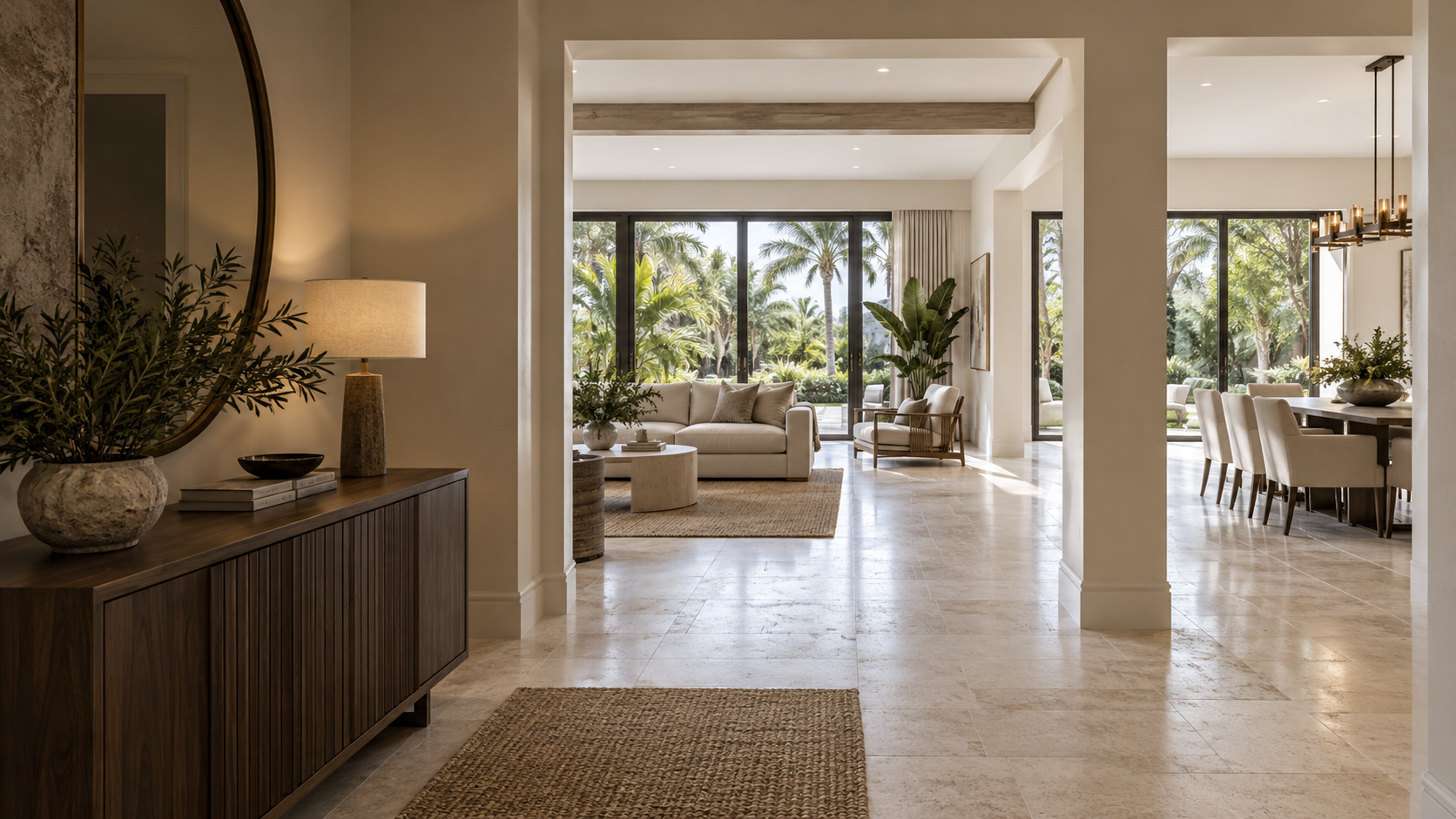
Room & circulation reconfiguration · Pinellas County
Better Flow.Beautifully Connected.
A home should feel natural to move through. MDI Custom Homes reworks room connections, doorways and circulation paths so your layout supports the way you live—with the detail and finish a custom home deserves.
Florida Certified Building Contractor · CBC1267559
Seminole · Largo · Pinellas County
Remodel around your everyday life
Less awkward.
More intentional.
Room reconfiguration changes the relationship between spaces: where you enter, how rooms connect and which routes people use. It can address a cramped kitchen approach, an inconvenient hallway or a primary suite that lacks privacy.
As part of our interior reconfiguration services, MDI helps turn those frustrations into a coordinated remodeling scope. The aim is a layout that works as thoughtfully as it looks.
Connect gathering spaces.
Consider how the kitchen, dining area and living room work together. Improve access without sending every walking route through the busiest work zone.
Explore custom kitchen remodeling →Give private rooms room.
Rethink bedroom entries, bathroom access and walk-in storage. Preserve separation where quiet, dressing space or a more private retreat matters.
Explore bathroom remodeling →Make the whole plan work.
Coordinate a new room purpose, better storage or a dedicated entertainment space with the circulation and finishes throughout your home.
Explore whole-home renovations →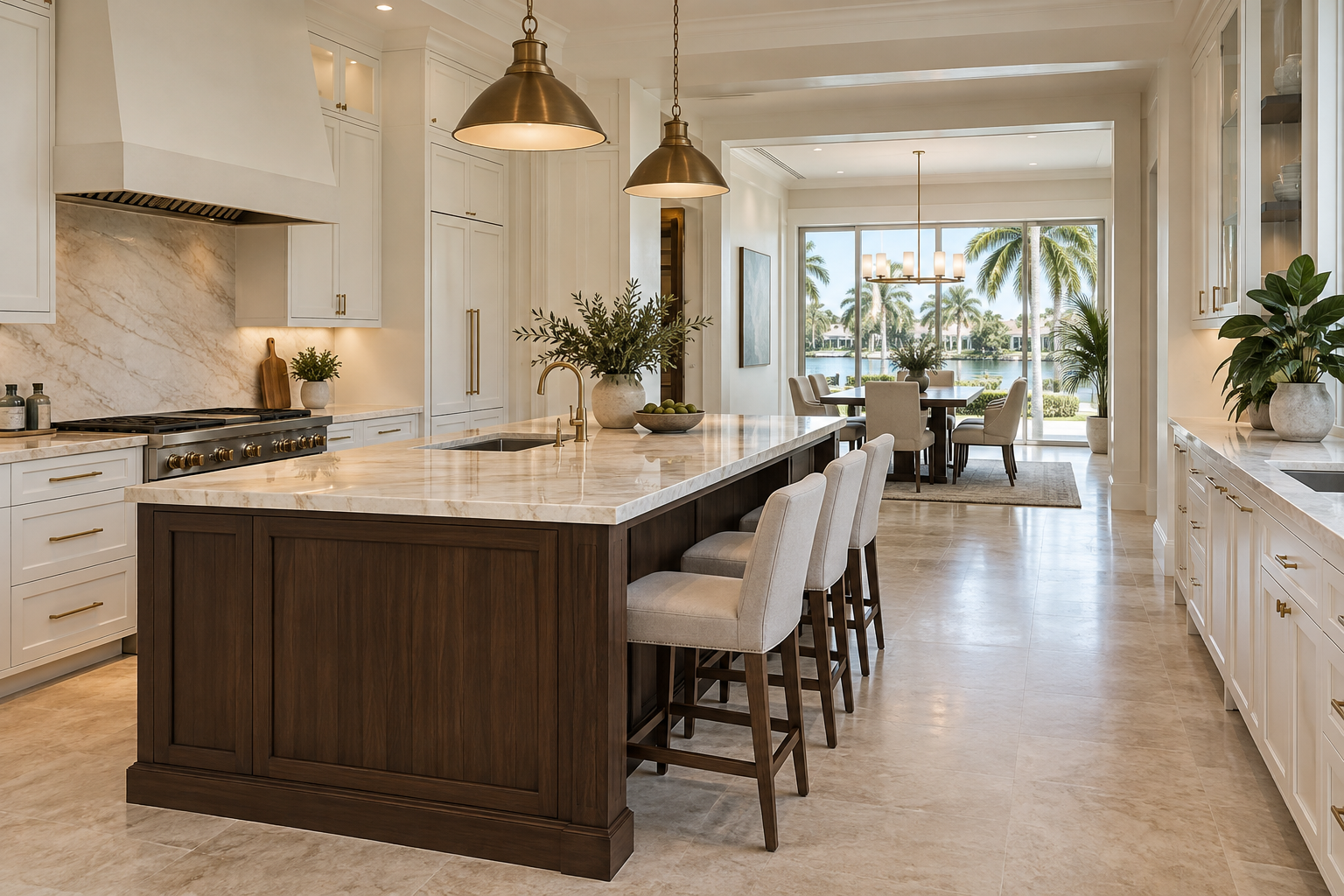
Beauty needs breathing room
A kitchen that connects.
A route that makes sense.
An island can be beautiful and still sit in the wrong place. We consider the routes around cabinetry, appliances, seating and adjacent rooms so your kitchen works within the larger home.
- Review how people enter and pass through the room.
- Consider door swings, furniture and cabinet clearances.
- Coordinate openings with storage and natural light.
- Plan utility changes before finishes are selected.
Thoughtful planning before construction
Start with the way
you want to live.
Understand the friction
Walk through the existing layout and identify the routes, room uses and privacy concerns that need attention.
Assess the conditions
Review walls, openings and building systems. Identify where structural evaluation or professional design input is needed.
Coordinate the scope
Connect layout decisions to utilities, cabinetry, finishes and applicable permits before the affected work begins.
Build with continuity
Coordinate trades and inspections so altered spaces connect through considered transitions and consistent detail.
Structural modifications · Permit assistance · Inspection coordination
Custom spaces. A more personal rhythm.
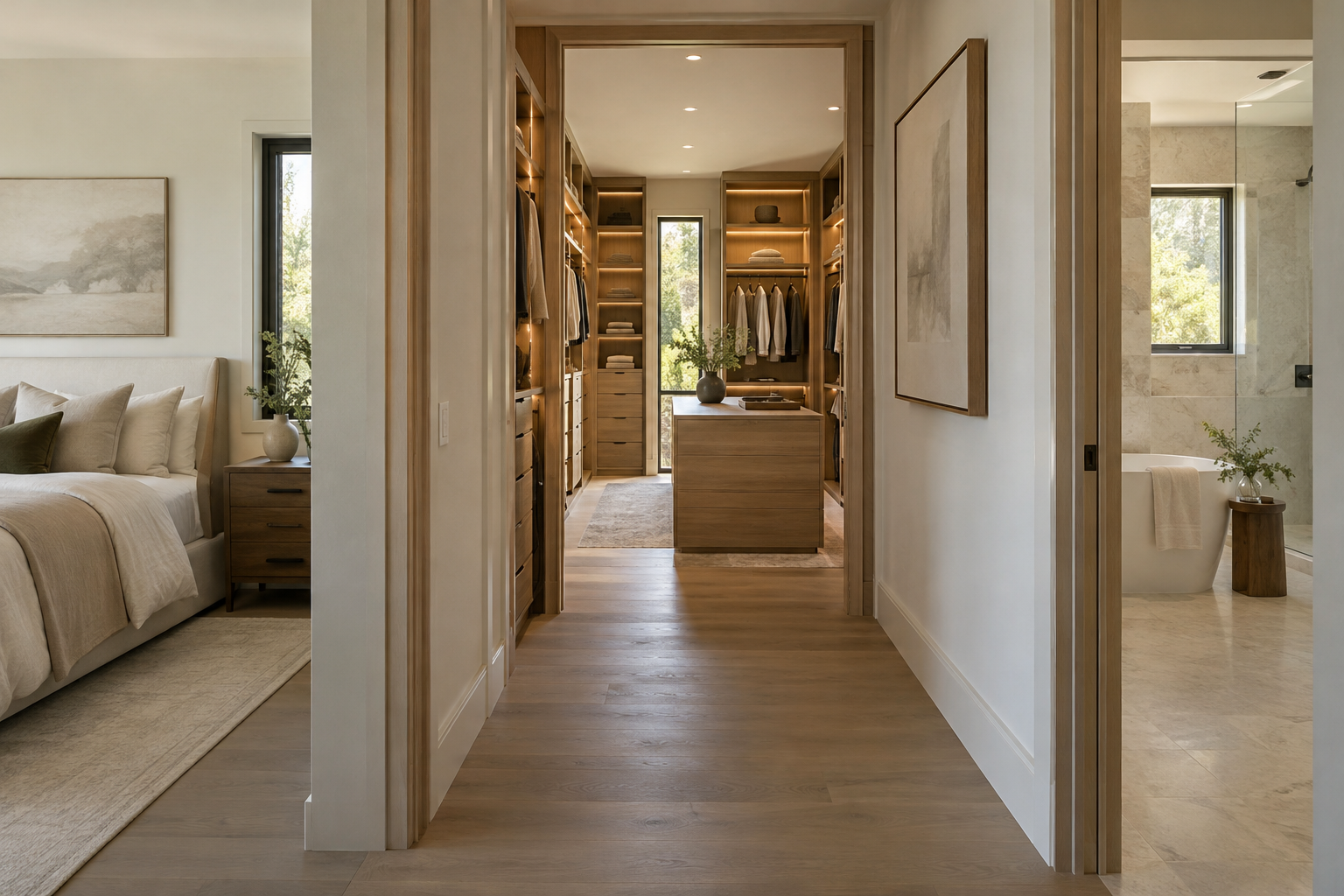
A suite that feels
like a retreat.
A well-planned connection between bedroom, bathroom and walk-in closet can make daily routines easier while protecting privacy. The same thinking applies to a quiet office or a dedicated movie room: the entry and surrounding spaces matter.
We consider what belongs together, what needs separation and how the finished rooms will be used. Customization should solve a real need, with materials and details that feel connected to the rest of your home.
Local remodeling expertise
Seminole. Largo.
Throughout Pinellas County.
MDI Custom Homes works with homeowners seeking a more considered layout in Seminole, Largo and surrounding Pinellas County communities. Our focus is remodeling and custom improvements that make an existing home work beautifully.
Share your address, the spaces you want to change and the biggest frustration with the current layout. A few photos or an existing floor plan can help frame the first conversation.
A clearer plan starts with clear answers
Your layout.
Your questions.
What is room and circulation reconfiguration?
It means changing how rooms connect and how people move through a home. The work may involve doorways, partitions, hallways, room boundaries or storage locations. The goal is to improve everyday use, privacy and the relationship between spaces, rather than simply update finishes.
Can I improve the layout without making everything open plan?
Yes. Better circulation does not always require removing every wall. A relocated doorway, a more direct route to the kitchen or a better connection between a bedroom, bathroom and closet can improve usability while retaining separate rooms and privacy.
How do you determine whether a wall can be changed?
Existing conditions must be evaluated before a wall is removed or altered. Structural support, utilities and the surrounding construction may affect the design. Where needed, the scope includes coordination with an appropriate design professional and the relevant permitting process.
Does a room layout change need a permit?
Requirements depend on the work and the local jurisdiction. Changes affecting structural elements, building systems or other regulated work may require permits and inspections. MDI reviews the proposed scope so those requirements can be addressed before construction proceeds.
Can the layout work be combined with a kitchen or whole-home remodel?
Yes. Planning circulation alongside a kitchen, bathroom or whole-home renovation helps coordinate openings, cabinetry, utilities and finishes. It also allows decisions about storage, privacy and furniture placement to be considered together.
Make room for a better way to live
Let's rethink
how your home connects.
Tell us what feels awkward today and what you want the space to become. We will help define the next step.
Design imagery is illustrative and does not depict completed MDI projects.