
Temporary restrooms are a small part of a remodeling budget, but an unclear arrangement can create friction from the first day of work. Homeowners and contractors should settle who orders the facilities, what the price includes, where they will go and who handles service calls before the crew arrives.
Updated October 15, 2026 · MDI Custom Homes LLC · Florida Certified Building Contractor CBC1267559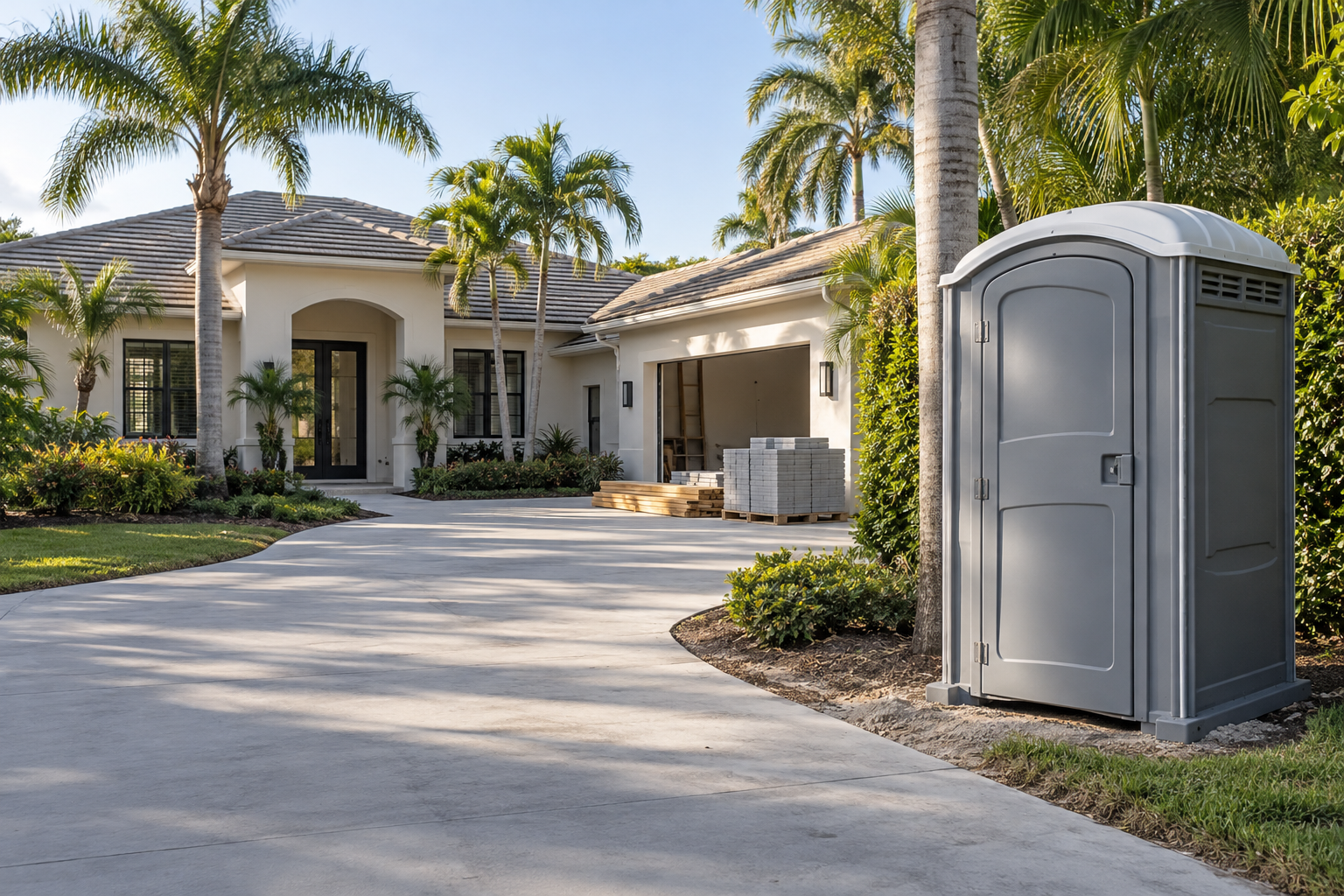
1. Put the payment arrangement in writing.
A proposal that says “jobsite setup included” may leave practical questions unanswered. Ask whether it includes the restroom, handwashing facilities, delivery, regular service and pickup. If a cost is excluded or treated as an allowance, identify how the final charge will be calculated and approved.
Distinguish the rental customer who books the equipment and receives the vendor’s invoice from the project cost allocation between homeowner and contractor. A contractor can order the unit while recovering the agreed expense through the project price. An owner-arranged rental still needs coordination with the site team.
Record who may request extra service, approve an extension or move the equipment. Do not assume a subcontractor supplies a separate unit, or that every employer’s responsibilities disappear because another party booked one. Review scope definition and cost control and subcontractor roles in remodeling.
2. Separate billing from sanitation requirements.
OSHA’s construction sanitation standard, 29 CFR 1926.51, addresses toilets, drinking water and washing facilities. Its toilet provisions include minimum facility counts and a limited exception for qualifying mobile crews. A small project is not automatically exempt simply because it takes place at a home.
OSHA’s restroom guidance emphasizes sanitary facilities that workers can use when needed. A locked, inaccessible or unusable toilet is not an effective plan. Employers should confirm the applicable arrangement for their workers and coordinate with the party managing shared facilities.
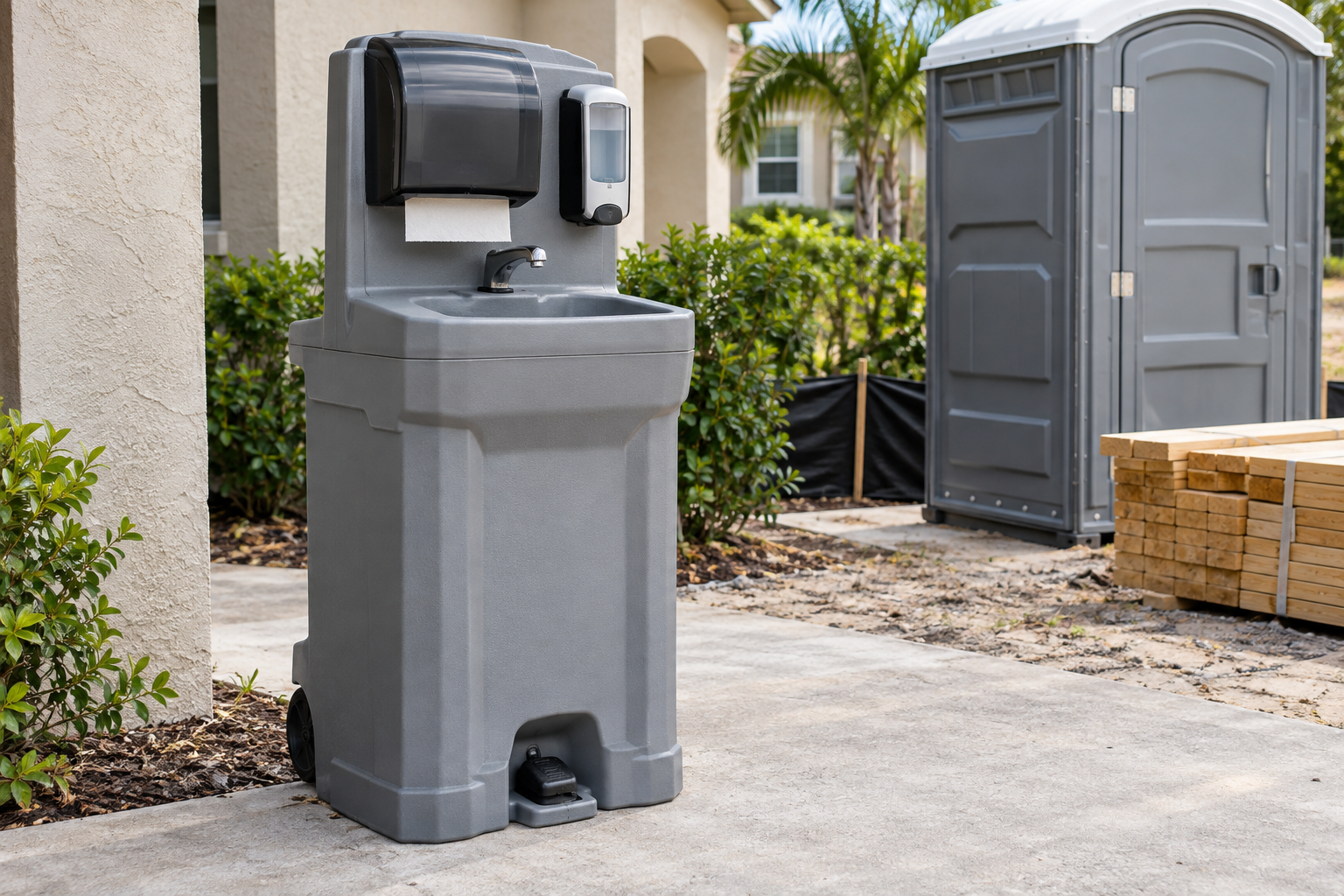
Also plan the washing facilities required for the work. The construction standard addresses running water, cleansing agents and drying provisions. A sanitizer dispenser alone should not be treated as a substitute for the required washing setup. Match equipment and servicing to the actual site rather than choosing solely by the lowest rental price.
For broader context, see our construction workplace safety resource.
3. Compare the complete rental quote.
Portable restroom pricing varies with location, equipment, duration, servicing and access. Obtain a current written quote for the actual project. A published weekly rate can be misleading if the vendor bills by another rental period or adds charges for delivery and pickup.
| Quote item | What to clarify |
|---|---|
| Equipment | Unit type, number of facilities, washing provisions and any project-specific accessibility needs. |
| Delivery and pickup | Separate charges, scheduling windows, access conditions and who confirms the location. |
| Rental period | Minimum term, billing cycle, extension charges and the process for ending the rental. |
| Routine service | Included visits, cleaning, pumping, supplies, water replenishment and missed-service procedure. |
| Changes | Extra cleaning, relocation, additional units, damage terms and other applicable fees. |
For example, if work runs beyond the booked period, someone must extend the rental and confirm the extra cost. If pickup is delayed because a truck cannot reach the unit, the original completion date may not end the bill. Resolve those scenarios during pre-construction planning.
4. Decide whether an existing bathroom is available.
Do not assume workers may use the homeowner’s bathroom. Discuss permission, privacy, access hours, the path through the home, cleaning and supplies. The responsible employers still need to determine whether the proposed arrangement meets applicable requirements.
Availability can change during a renovation. A bathroom may be disconnected, behind a restricted work area or needed by an occupied household. For a bathroom remodel, ask what happens during each phase rather than treating the existing toilet as available throughout.
A portable unit can help separate worker access from household space, but it still needs a suitable location and ongoing service. If the plan relies on another facility, identify it specifically and confirm real access. “There is a store nearby” is not a complete jobsite arrangement.
5. Plan placement with the vendor and site team.
Mark the proposed location before delivery. Have the rental provider confirm a stable installation area and workable service access. Coordinate the location with deliveries, parking, material storage, pedestrian routes and the household’s daily access.
Keep the facility out of active equipment paths and avoid blocking doors, emergency access or required routes. Ask the appropriate property or local authority about restrictions when a proposed location affects shared property, a sidewalk or a public right-of-way. Condo and association rules may also affect the plan.
Decide how gates will be opened for service and who will respond if the provider cannot reach the unit. In coastal Pinellas County, include temporary facilities in the project’s weather planning and follow the provider’s instructions for relocation or removal. Do not improvise anchoring or move a loaded unit without the provider’s direction.
These details belong alongside scheduling and site supervision, not in a last-minute delivery-day conversation.
6. Assign servicing, checks and final pickup.
Set the service plan with the rental provider based on use and site conditions. OSHA’s interpretation on construction toilet sanitation explains that facilities must be maintained in a sanitary condition. A routine service interval does not excuse leaving a facility unusable between visits.
Name the person who checks access, condition and supplies, and provide a clear contact for problems. A short site checklist can cover whether the unit is accessible, the door and latch work, supplies are available and additional service is needed. Report damage, leakage or an unusable facility promptly and arrange a suitable alternative while the issue is resolved.
Revisit the plan when crew size, project duration or site access changes. At closeout, confirm when workers no longer need the facilities, schedule pickup, provide vendor access and check the final invoice against the agreed rental terms. Include this in the project closeout checklist.
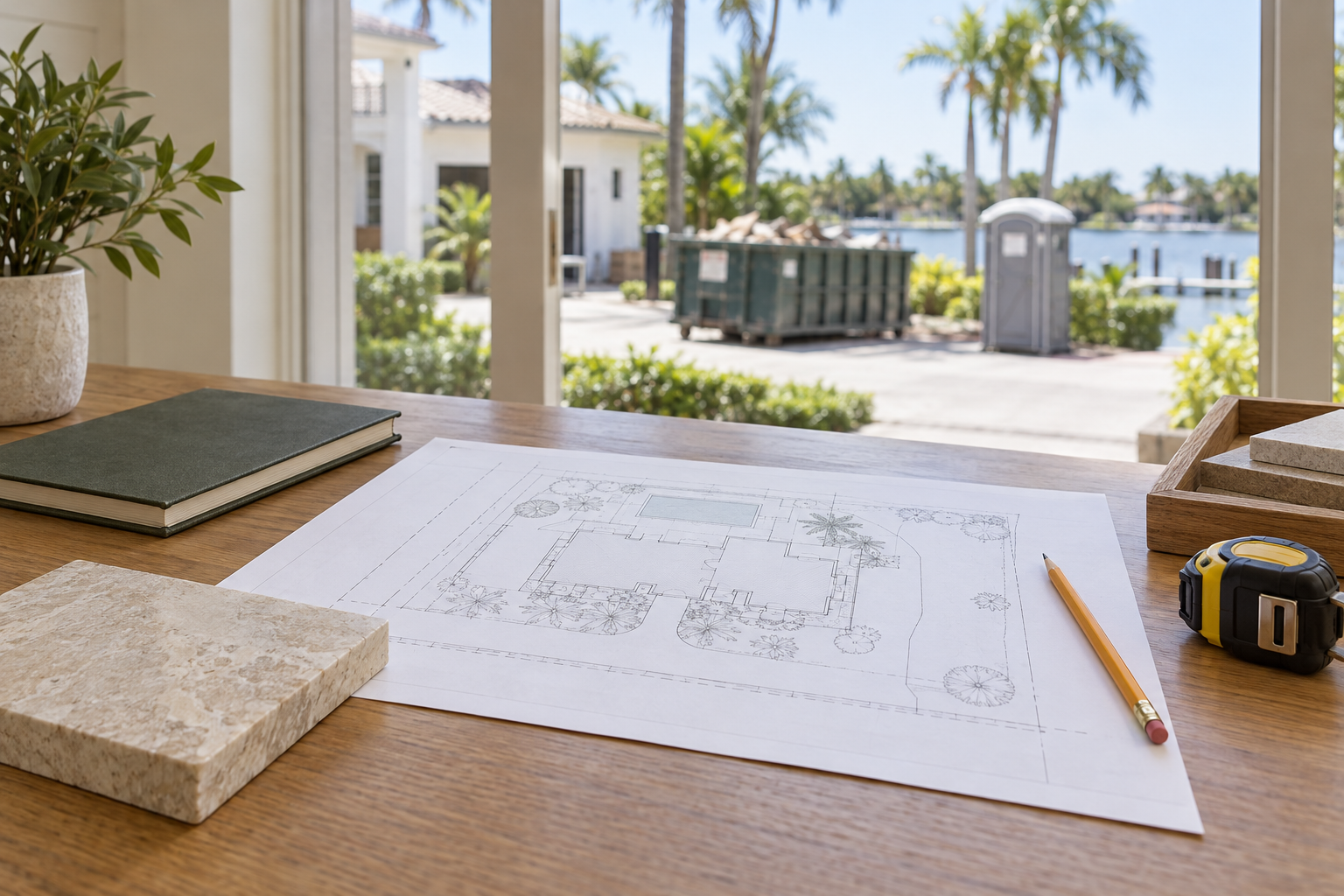
Plan the site as carefully as the finished rooms.
For a custom kitchen, a bathroom renovation or a whole-home remodel, a useful project plan addresses both the finished result and how work will happen in the existing property. Restrooms, access, protection, deliveries and communication deserve clear decisions before construction.
MDI Custom Homes LLC is a Florida Certified Building Contractor, CBC1267559, focused on high-end remodeling, kitchens, bathrooms and interior customization in Seminole, Largo, Pinellas Park and nearby communities. Bring the property’s practical constraints into the initial scope discussion so the project team can plan the work around them.
Jobsite restroom questions
Does the homeowner always pay the portable toilet company directly?
No. The rental customer and the project cost allocation depend on the agreements. The contractor may include the expense in the project price, list it separately or agree to an owner-arranged rental. Confirm who books, pays, extends and cancels the rental.
Does a small home remodel automatically need no restroom plan?
No. Project size alone does not establish an exemption. Employers should evaluate the applicable sanitation requirements and confirm suitable facilities for their workers.
Can workers use the homeowner’s bathroom?
Only after access and responsibilities have been agreed and the responsible employers have confirmed the arrangement is suitable. Address availability during plumbing interruptions, household privacy, cleaning and supplies.
How often should a portable toilet be serviced?
Set the schedule with the provider for the actual use and site conditions, and arrange additional service when needed. A facility must remain sanitary and usable between scheduled visits.
Bring your project into focus.
Tell MDI Custom Homes what you want to improve, what you want to keep and what matters most. We can discuss the scope and next planning steps for your Pinellas County home.
Discuss your renovation ↗Call 727-213-7309Official resources
- OSHA construction sanitation standard — 29 CFR 1926.51
- OSHA restrooms and sanitation overview
- OSHA interpretation on sanitary construction toilet facilities
Use the current official guidance and project-specific requirements when planning the work.
Images are illustrative and do not depict completed MDI projects or a certified sanitation installation.
