
Wholesale kitchen cabinet shopping is most useful when the price is tied to a complete, buildable plan. Two quotes can appear to cover the same kitchen while including different cabinet sizes, finishing pieces, delivery services or installation responsibilities. This guide helps Pinellas County homeowners compare the actual cabinet package and connect the purchase to the broader remodeling project.
Updated October 15, 2026 · MDI Custom Homes LLC · Florida Certified Building Contractor CBC1267559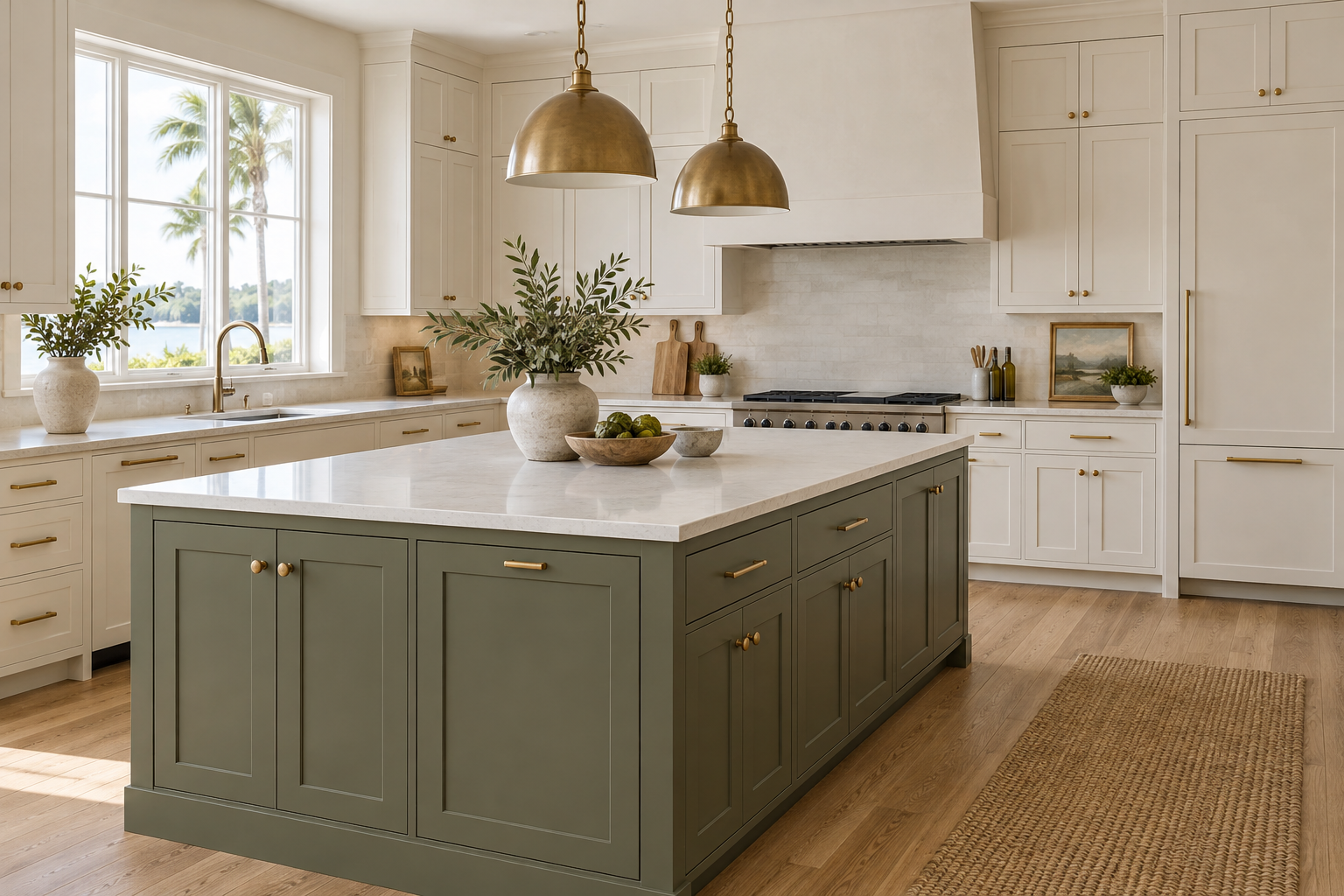
1. Separate the sales label from the product specification
The term wholesale is used in different ways by cabinet sellers. A program may involve trade accounts, volume pricing, direct sales or pricing offered to homeowners. Ask who can buy, whether minimum quantities apply and what services are included. Do not assume the label means the seller manufactures the cabinetry.
Likewise, ready-to-assemble describes how cabinets are supplied. Stock, semi-custom and custom describe different levels of product flexibility. These labels answer different questions and can overlap.
The useful comparison is the actual product and service package. Review the cabinet line and written specifications, then evaluate whether the available sizes, finish options and modifications suit the room. Our quality cabinetry planning guide explains the construction and design details behind those choices.
2. Compare quotes against the same approved plan
Use one dimensioned plan as the basis for competing quotes. Include wall dimensions, openings, appliance model numbers, ceiling conditions and the cabinetry that faces adjoining rooms. Mark the drawings with a version date so a revised plan is not compared with an older item list.
Ask each supplier to identify any proposed substitutions. A wider cabinet, fewer drawers, a different corner solution or a shorter pantry can change both the price and the function of the kitchen. Those differences should be visible before a total is treated as comparable.
For a compact room, test the layout with appliance doors and cabinet drawers open. Our small-kitchen planning guide covers circulation and storage tradeoffs. Final ordering should follow verified measurements and the selected products’ installation requirements.

3. Use a complete cabinet quote checklist
| Compare this | What the quote should identify | Why it matters |
|---|---|---|
| Cabinet line and finish | Manufacturer or program, door style, finish name and available modifications | Similar-looking doors may belong to different construction or finish systems |
| Cabinet schedule | Item codes, quantities, widths, heights, depths and orientation where relevant | The item list must match the approved plan |
| Finishing pieces | Fillers, end panels, skins, toe kicks, trim and specified decorative details | These complete the visible transitions and affect the order total |
| Interior accessories | Included organizers, pull-outs, dividers and hardware | A drawing can show an accessory that is not included in the price |
| Assembly and delivery | RTA or assembled supply, assembly labor, freight and delivery service level | The delivered package may require additional handling or labor |
| Installation and room work | Included labor and clearly listed exclusions | Cabinet supply alone is different from a complete kitchen remodel |
| Order terms | Quote validity, payment stages, changes, returns, damage reporting and warranty process | The purchase needs a clear written process as well as a price |
Mark each line as included, excluded or still to be confirmed. Resolve the unknowns before choosing a supplier on the total alone.
4. Request evidence for quality claims
Ask what is used for the cabinet box, back, shelves, doors, drawer boxes and hardware. Broad phrases such as “real wood” do not explain the material in every component. Compare the specifications that matter to the intended room and use.
Review drawer travel, useful interior dimensions, stated load limits, finish care and the availability of replacement parts. Soft-close hardware is a useful feature, but it does not establish the performance of the entire cabinet.
If a supplier claims certification, verify that the exact line is covered. The KCMA A161.1 program evaluates cabinet structure, drawers, doors and finishes. It is one example of documented performance evidence; this guide does not claim that every cabinet offered by MDI is KCMA-certified.
Use physical samples to assess color and finish in your lighting. Confirm the expected variation for wood grain and finishes rather than assuming every part will look identical to a small sample.
5. Compare the full project scope, not a promotional kitchen
An advertised sample kitchen can be a starting point, but it may not match your room, cabinet mix or selected options. A package with mostly door cabinets is not the same as a plan with numerous drawers, tall units and specialized storage.
Separate the cabinet supply cost from related project costs: assembly, freight, installation, demolition, disposal, counters, backsplash, hardware, repairs and any electrical or plumbing work. Identify which items are included in the remodeling proposal and which will be purchased separately.
For example, one quote may include finished island panels and installation while another lists only cabinet boxes. The lower total does not establish a better value until both scopes are aligned. Our scope and cost-control resource explains how to keep those responsibilities clear.
Confirm any trade or volume discount in writing for the actual order. Avoid planning around an assumed percentage saving or a promise that every wholesale purchase costs less than every retail alternative.
6. Plan delivery and receiving before scheduling installation
Ask what delivery service is included: where the shipment will be unloaded, whether unloading assistance is provided, how access limitations are handled and who moves the cabinets to the storage location. Confirm requirements for the specific address, including association access rules where applicable.
Review the seller’s current instructions for checking quantities, documenting visible or concealed damage and reporting shortages. Follow the stated reporting process and time limits rather than assuming all suppliers use the same rules. Keep the order confirmation, delivery record and relevant photographs together.
Arrange appropriate protected storage that meets the cabinet manufacturer’s instructions. Coordinate the delivery plan with the renovation schedule so the room and installation team are ready. A published lead-time estimate should be confirmed for the actual items and order before demolition or labor is committed.

7. Define who assembles, installs and finishes the work
For RTA cabinetry, identify who is responsible for assembly, where it will take place and whether assembly labor is included. Confirm the selected cabinet system’s instructions and the installer’s scope before delivery.
The installation scope should address field conditions, anchoring appropriate to the wall construction, leveling, fillers, exposed ends, trim, hardware and final adjustment. Countertop support and appliance interfaces must be coordinated with the relevant products and trades.
Do not add sealers or coatings to a factory finish unless the manufacturer specifically allows them. Keep the approved care instructions and warranty documents with the project records.
When the cabinets are part of a broader renovation, use a coordinated plan for the related work. See our remodeling contractor coordination guide and project closeout resource.
8. Review the order as a package before approval
- Match the documents. Confirm that the quote, cabinet schedule and drawings refer to the same layout version.
- Check the exact selections. Review the door, finish, cabinet dimensions, quantities, accessories and visible finishing parts.
- Check the interfaces. Confirm appliance openings, door movement, utility locations and countertop coordination.
- Confirm responsibilities. Identify who measures, orders, receives, assembles, installs and handles unresolved items.
- Read the current terms. Review payment, changes, returns, delivery, damage reporting and warranty information before committing.
Keep the approved documents in one place. If the design changes, request a coordinated revision instead of relying on a verbal description of which cabinets are different.
Choose the right route for your cabinet project
For cabinet purchasing, explore MDI Luxury Cabinetry’s cabinetry options and online ordering process. The ordering page describes professional review and delivery within the continental United States. Confirm the selected products, shipping availability and current order terms for your project.
If your project in Pinellas Park, Seminole, Largo or a nearby community includes the surrounding room, MDI Custom Homes can discuss kitchen remodeling, interior reconfiguration and whole-home renovation scope. Bring the cabinet plan and the related work list to the same conversation.
A thoughtful cabinet purchase should end with a room that works, a complete order and clear responsibility for installation. Discuss your Pinellas County remodeling project with MDI Custom Homes.
Wholesale cabinetry questions, answered
Does wholesale cabinetry mean the cabinets come directly from a manufacturer?
Not necessarily. Sellers use wholesale terminology in different ways. Ask who supplies the product, who can buy, what pricing conditions apply and which services are included.
Are wholesale cabinets always cheaper?
No universal saving is guaranteed. Compare the exact item list, construction, finish, delivery, assembly and installation scope before judging the total.
Are RTA cabinets the same as wholesale cabinets?
No. RTA means ready to assemble, while wholesale describes a sales or pricing approach. Evaluate the actual product specifications and the complete project requirements.
What finishing pieces are easy to overlook?
Fillers, finished end panels, skins, toe kicks, trim and specified accessories should be checked against the drawings. Their availability and inclusion depend on the selected cabinet system and quote.
Can I assume delivery includes carrying cabinets inside?
No. Confirm the delivery service level, access requirements and unloading responsibilities for the actual order and address.
What should be checked before approving the order?
Match the drawings to the item list, verify selections and appliance information, resolve finishing details, assign receiving and installation responsibilities, and review the current written order terms.
Bring your project into focus.
Tell MDI Custom Homes what you want to improve, what you want to keep and what matters most. We can discuss the scope and next planning steps for your Pinellas County home.
Discuss your renovation ↗Call 727-213-7309Official resources
- KCMA: A161.1 quality cabinet certification
- MDI Luxury Cabinetry: cabinetry options
- MDI Luxury Cabinetry: ordering process
Use the current official guidance and project-specific requirements when planning the work.
Design imagery is illustrative and does not depict completed MDI projects or exact manufacturer products.
