
A pool can change how a home connects to its backyard, but the design reaches beyond the water’s edge. Access, drainage, barriers, equipment, shade and the relationship to interior rooms all affect whether the finished space works well. For homeowners in Seminole, Largo and surrounding Pinellas County communities, the useful questions stay relevant long after a particular tile color or feature stops trending.
Updated October 15, 2026 · MDI Custom Homes LLC · Florida Certified Building Contractor CBC1267559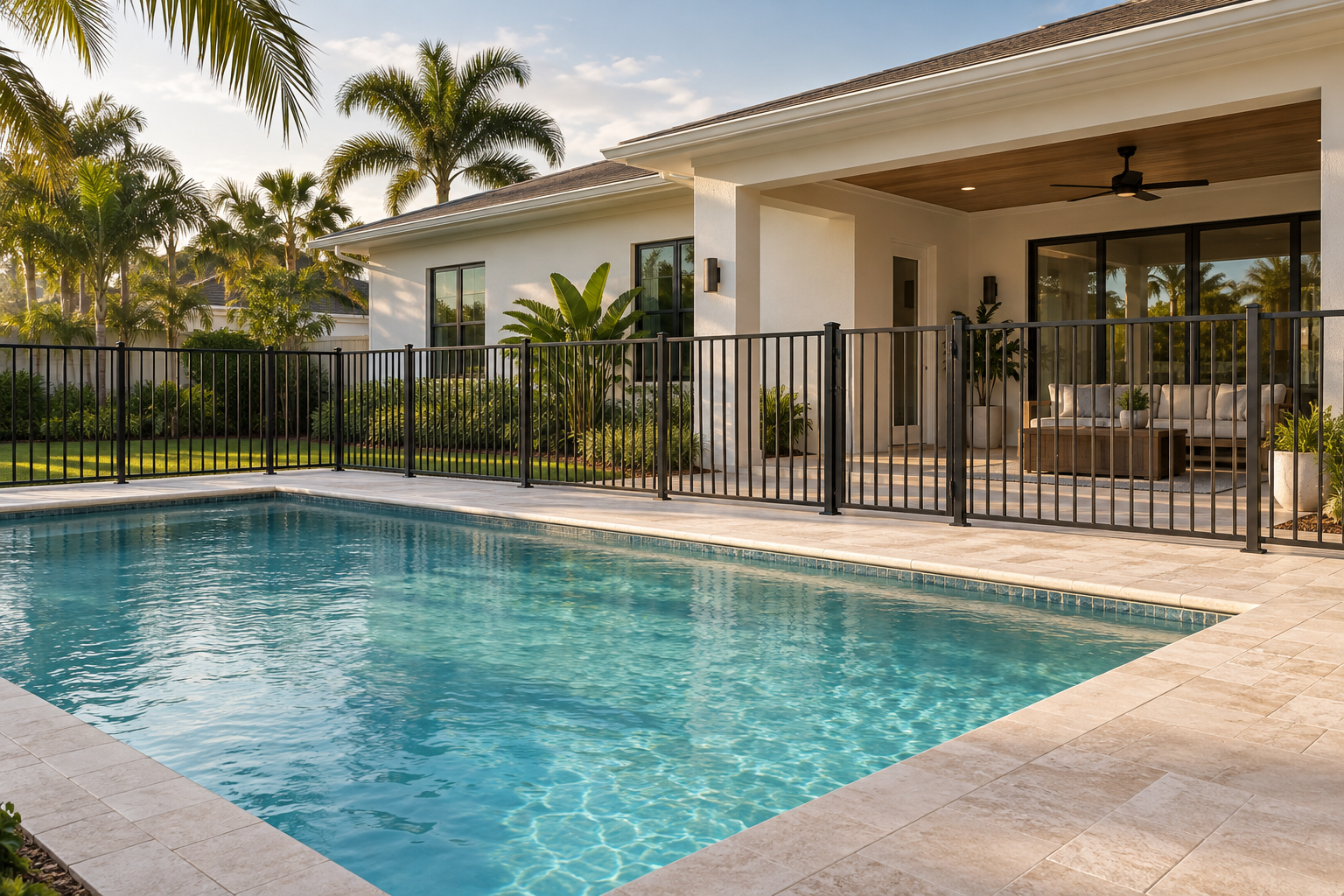
Start with how the outdoor space will be used
Decide whether the priority is swimming, family recreation, exercise, entertaining or a quiet place to relax. A large shallow ledge uses space differently from an uninterrupted swimming area. An attached spa, water feature or additional seating area also changes the equipment and maintenance discussion.
Look at the entire backyard rather than choosing a pool shape in isolation. Allow for circulation, furniture, shade, landscape maintenance and a practical route between the house and outdoor areas. Consider the views from the rooms you use most, while keeping the safety plan central to the layout.
If a pool project accompanies a whole-home renovation, review the indoor and outdoor plans together. A redesigned kitchen, a nearby bathroom or changed door location may affect how the family moves through the property. Document these connections before separate contractors price disconnected pieces of the work.
Confirm the site constraints before committing to a design
Have the team review a current survey and relevant property information. Identify boundaries, easements, existing structures, utilities, equipment, trees and available construction access. Confirm setbacks and other applicable requirements with the authority serving the property.
Discuss existing grades, runoff and the relationship between the planned deck and the home. Pool and deck work should not be designed independently of drainage or door thresholds. Conditions such as limited access, groundwater, nearby structures or concealed utilities can affect methods and cost; establish what needs investigation before making a firm commitment.
For coastal properties, ask which floodplain, coastal or environmental reviews apply to the specific address and scope. A neighboring project does not establish the requirements for yours. Coordinate any necessary design and engineering input and retain the assumptions used to develop the plan.
Useful early question: how will excavation equipment and materials reach the backyard, and which fences, landscaping or finished surfaces will need removal and restoration?
Design pool safety into the layout
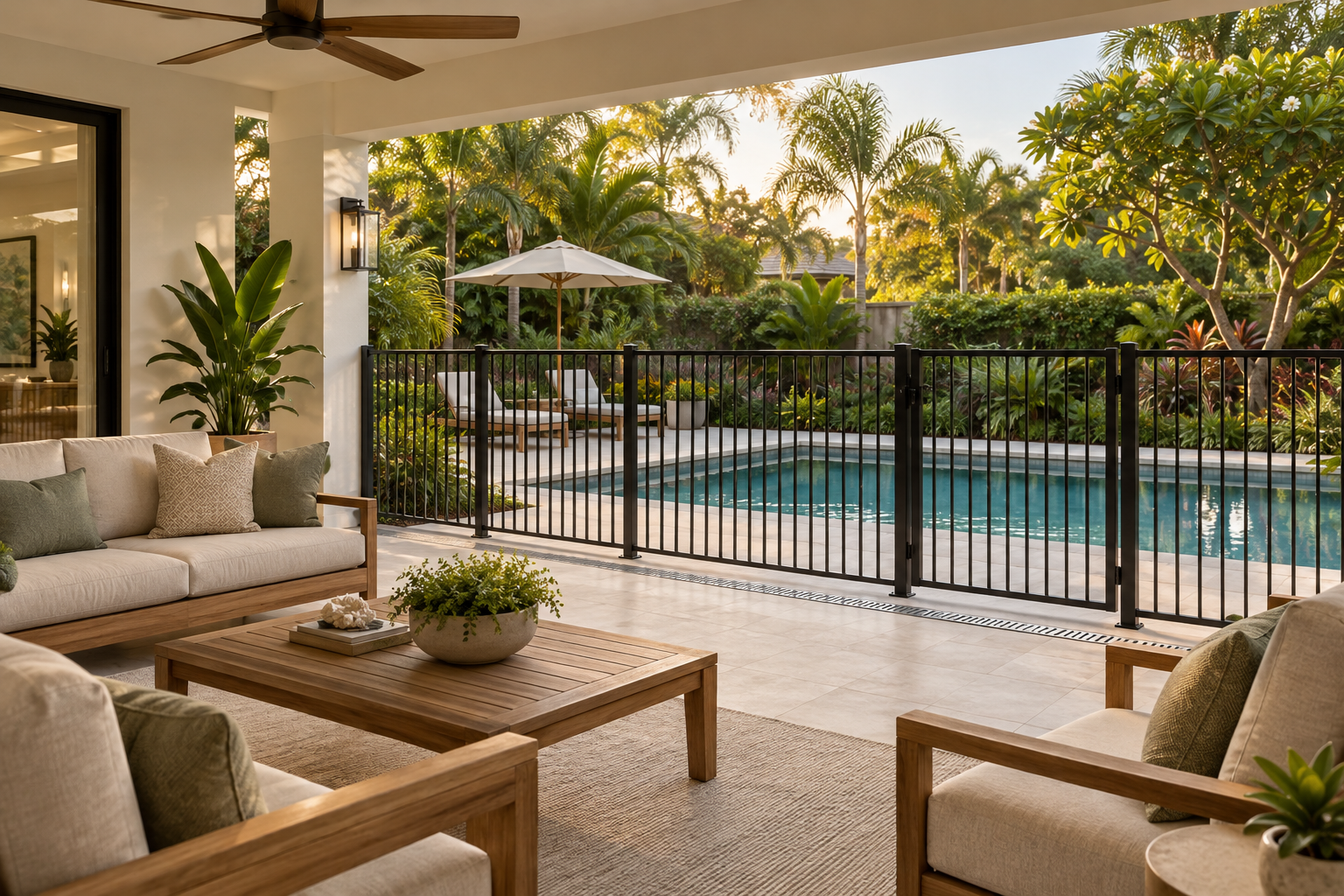
Discuss barriers, gates, alarms, covers and access routes before finalizing the pool and deck. The U.S. Consumer Product Safety Commission’s Pool Safely guidance recommends layered protection, including a non-climbable barrier and a self-closing, self-latching gate. The project team must confirm the applicable local requirements and approved details for your property.
Place furniture and landscaping so they do not undermine the barrier. Consider how adults will see the swimming area, how household doors connect to it and how gates will operate after landscaping and finishes are installed. An attractive rendering does not establish compliance.
Barriers and alarms do not replace attentive adult supervision. Pool Safely also emphasizes swimming skills, keeping children away from drains, maintaining appropriate drain covers and learning CPR. Review the current guidance with everyone responsible for children around the pool.
Ask the pool professional to explain the installed safety equipment and its care at handover. If a cover is proposed, confirm its intended function and safety rating; an evaporation cover should not automatically be treated as a safety barrier.
Compare equipment and water use as a complete system
Ask the pool professional to match the pump, filter, heater, treatment equipment and controls to the actual design and required operation. Additional water features may have their own operating demands. Oversimplified rules about pump size or run time can overlook the needs of the complete system.
ENERGY STAR’s pool-pump guidance explains how variable-speed equipment can match different operating tasks. Use its product resources to compare models, then ask the installer to explain selection and commissioning. Expected savings depend on the equipment being replaced, configuration, operation and local electricity costs; a blanket savings promise is not a project estimate.
EPA’s pool water-efficiency guidance identifies evaporation, cleaning, leaks and splashing as sources of water use. A suitable cover used consistently can reduce evaporation and help retain heat. Plan where the cover will be stored and whether the chosen shape and features make everyday use practical.
Include equipment access, ventilation requirements where applicable, service clearances and noise in the layout. Discuss how the system will be maintained and which supplies or replacement parts it requires. Automation can simplify some controls, but it does not eliminate inspections, testing, cleaning or professional service.
Select finishes for their actual exposure and upkeep
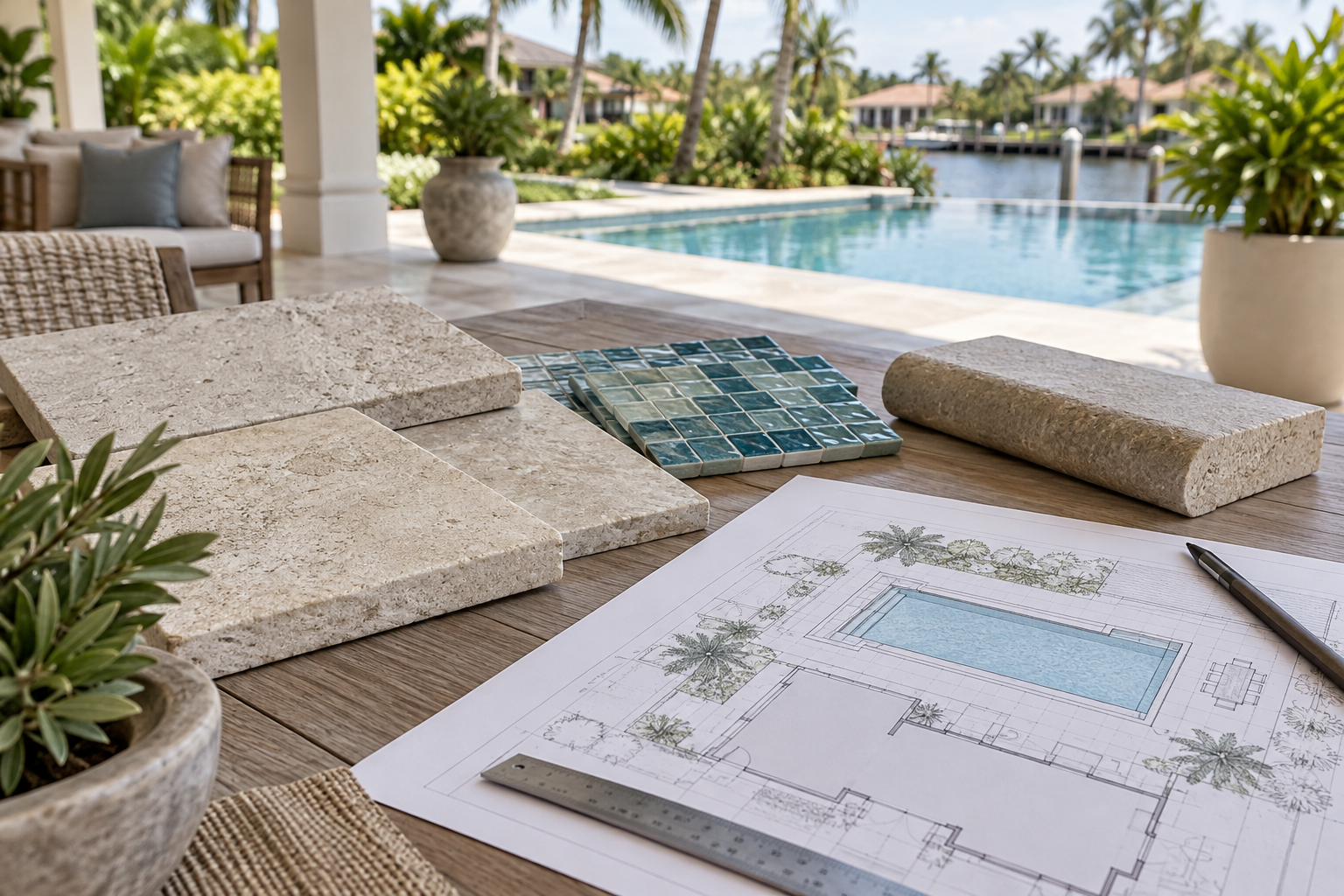
Compare coping, deck surfaces, waterline tile and interior finishes as one palette, then review each product’s suitability for its location. Ask for the manufacturer’s installation and care information. A surface that looks appealing in a sample may have different comfort, traction, cleaning or maintenance characteristics outdoors and when wet.
Review samples in outdoor light and discuss barefoot comfort, texture, staining, maintenance products and compatibility with the selected pool system. Ask the team to explain joints, transitions and edge details rather than selecting on color alone.
Use specific criteria when evaluating environmental claims. Ask what is documented about a product’s content, durability, expected maintenance and serviceability. Recycled content alone does not demonstrate that an entire pool will use less water or energy.
Keep landscaping and drainage coordinated with the finish plan. Discuss leaf debris, root growth, irrigation and access to service areas. Choose a design that can be maintained without routinely moving heavy furniture or obstructing gates.
Define the responsible team, permits and full scope
Identify who is responsible for pool design, construction, equipment, electrical work, related home alterations, inspections and final documentation. Verify the qualifications and license scope of the businesses performing the work. A company’s involvement in a home renovation does not by itself establish that it will perform every specialized pool task.
Pinellas County’s residential permit resources include pool and spa permit categories for county-administered work. Confirm whether the county or a municipality serves the address and which applications and documents your scope requires. Include barriers and related improvements in that discussion.
A complete proposal should distinguish the pool work from demolition, access, utility changes, deck work, drainage, barriers, landscaping restoration, equipment and any changes to the house. Record allowances, exclusions and the procedure for discoveries or requested changes.
Use pre-construction planning and scope definition and cost control to compare equivalent work. Clarify payment milestones, procurement and responsibility for protecting finished areas before construction starts.
Coordinate the construction sequence with the home
Review the planned sequence with all involved contractors, including approvals, site protection, access, excavation, structural and equipment work, required inspections, deck and barrier installation, startup and final approvals. The exact order depends on the design and authority; do not rely on a generic calendar as a promise of completion.
Ask which choices must be finalized before excavation or concealed work. Late changes to equipment, a spa, water features, lighting, a cover system or adjacent doors can affect more than the visible feature.
For an occupied home, establish construction access, secure work areas, delivery arrangements and how temporary conditions will be managed. Coordinate the pool schedule with interior work so one contractor does not repeatedly disturb another’s completed surfaces.
Agree on who communicates inspection readiness, changed conditions and schedule impacts. Our site-supervision resource and inspection coordination guide explain the value of clear responsibility across a larger renovation.
Finish with documented startup and an ownership plan
At handover, review the approved scope, outstanding items, required final approvals and the operation of equipment, controls, gates and safety devices. Ask the pool professional to provide startup instructions, maintenance requirements and product documentation for the installed system.
Record who handles routine service, how warranties are registered, which conditions require a service call and how to obtain support. Keep model information and the agreed settings with the project-closeout records. Operating instructions should be specific to the equipment, rather than a general list copied from a different pool.
MDI Custom Homes LLC focuses on high-end kitchens, bathrooms, interior reconfiguration and whole-home remodeling. When outdoor improvements are part of a broader renovation, begin with a conversation about the home, the interfaces between scopes and the appropriately qualified team required for each part of the project. Discuss your renovation plans with MDI Custom Homes.
Pool planning questions
What should I decide before choosing a pool shape?
Define the intended use, review site constraints and plan safety barriers, circulation, drainage and equipment access. Those decisions help determine which shapes and features are practical.
Does a variable-speed pump guarantee a particular energy saving?
No. Performance and savings depend on the selected equipment, system design, programming, use and local energy costs. Ask the pool professional for an estimate based on the actual project.
Is every pool cover a safety cover?
No. Confirm the proposed cover’s purpose, rating and approved use. A cover intended to limit evaporation should not automatically be treated as a safety barrier.
Should pool work be planned with a home remodel?
Yes, when the scopes affect the same doors, utilities, drainage, access or living areas. Coordinated planning helps the responsible contractors address those connections before work begins.
Bring your project into focus.
Tell MDI Custom Homes what you want to improve, what you want to keep and what matters most. We can discuss the scope and next planning steps for your Pinellas County home.
Discuss your renovation ↗Call 727-213-7309Official resources
- Pinellas County: residential permits
- CPSC Pool Safely: safety tips
- ENERGY STAR: pool pumps
- EPA: pool water efficiency
Use the current official guidance and project-specific requirements when planning the work.
Design imagery is illustrative and does not depict completed MDI projects.
