
Cabinetry determines how a kitchen stores, moves and feels. For a Pinellas County remodel, a strong purchase decision connects the cabinet specifications with the room measurements, appliance requirements and installation plan. This guide explains the questions worth answering before an order becomes a collection of boxes on the jobsite.
Updated October 15, 2026 · MDI Custom Homes LLC · Florida Certified Building Contractor CBC1267559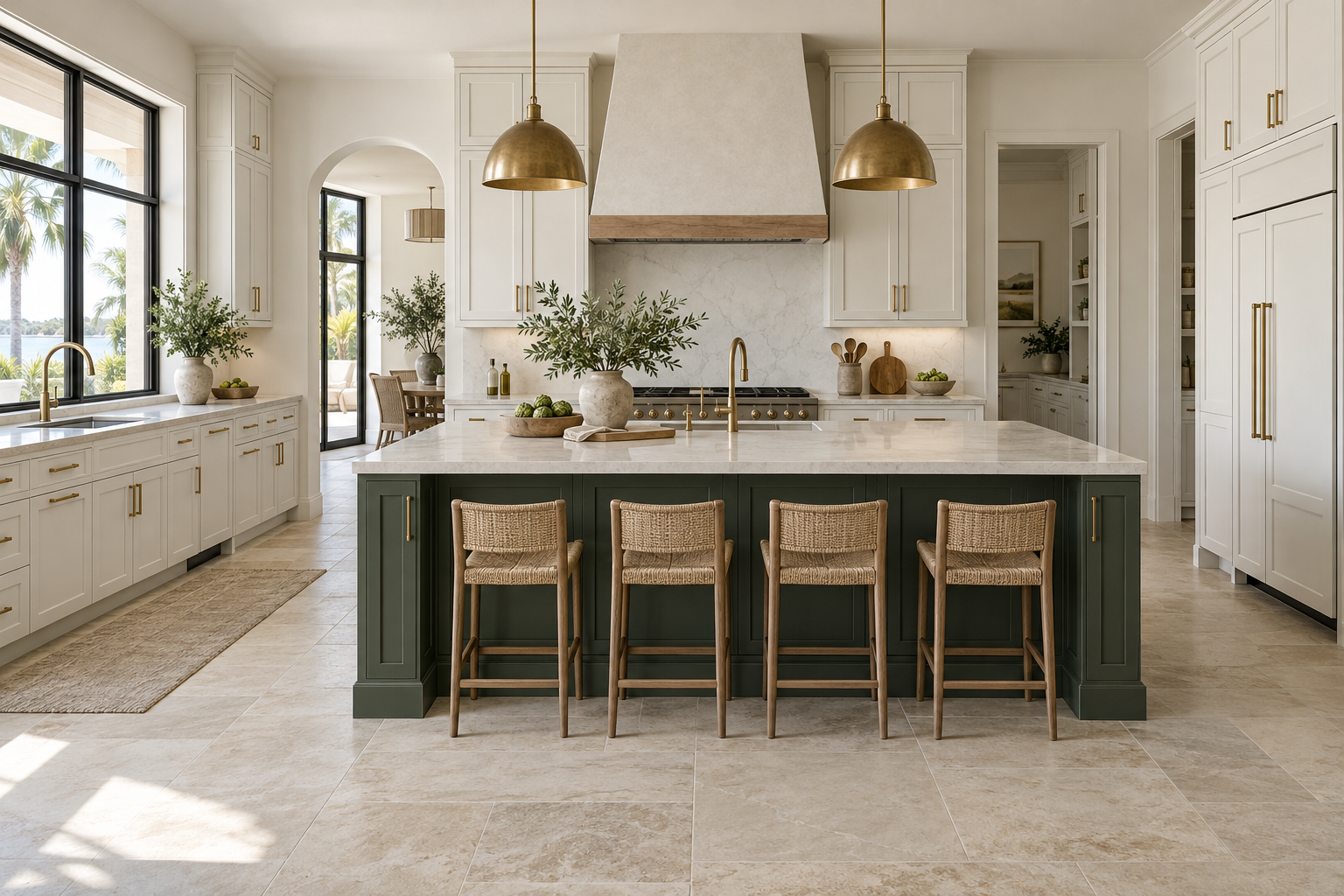
1. Confirm the exact line before comparing specifications
If you arrived here while researching Ridgewood cabinetry, start with the manufacturer and collection name on the current quote. Product names, catalogs and available finishes can change. A specification from another line—or an older article—is not a substitute for the documents governing your order.
MDI’s current cabinet collection page linked from this guide presents the Simple Shaker Series. Review that page and the current catalog with the seller before selecting a finish or assuming that Ridgewood specifications apply. Ask for the manufacturer, collection, door profile, finish name and item numbers in writing.
For the renovation around the cabinetry, begin with MDI Custom Homes kitchen remodeling. Cabinets and construction should be planned together, especially when the project includes a new island, moved appliances or changed walls.
2. Read cabinet construction component by component
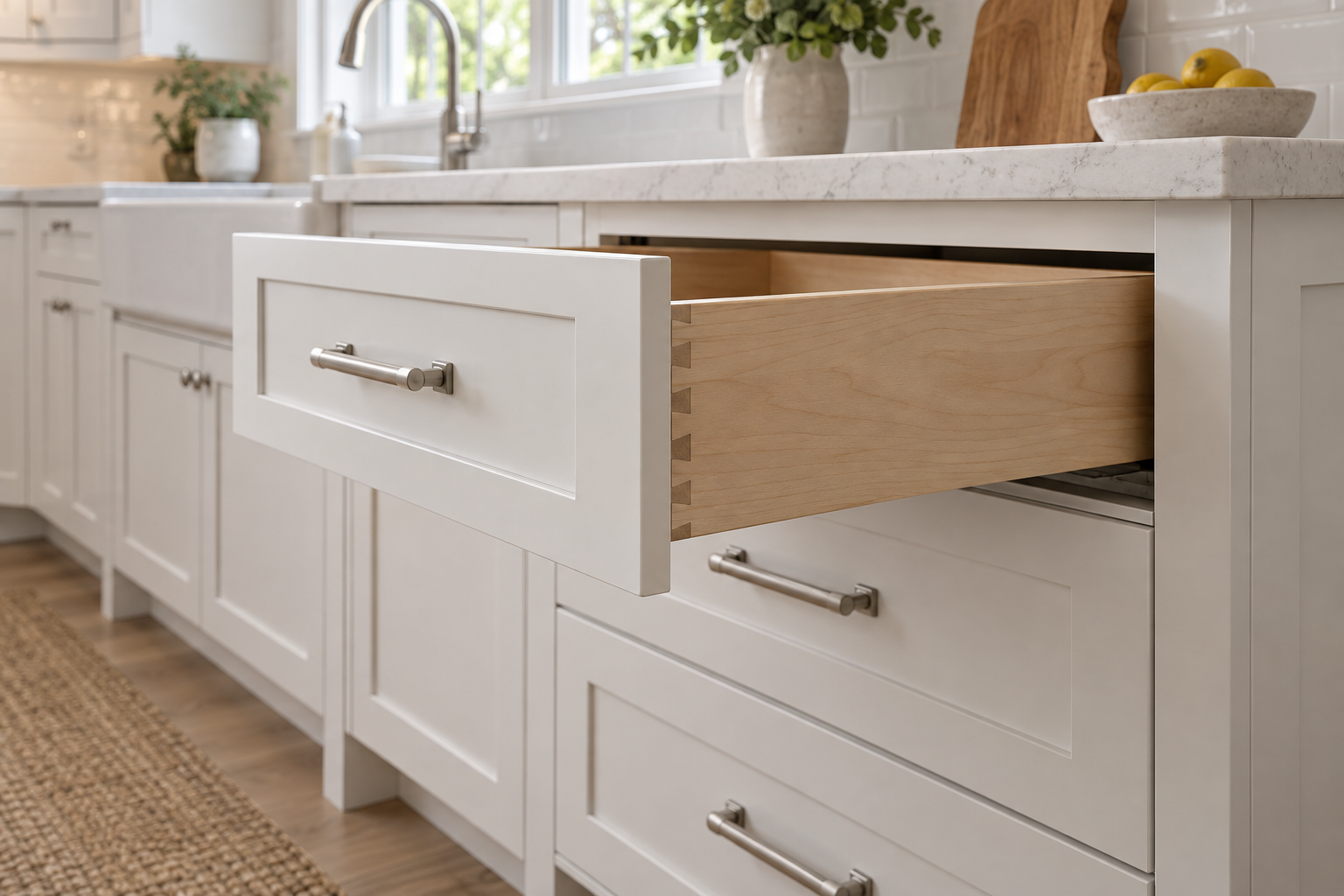
“Wood cabinets” can describe several different assemblies. Ask what each component is made from and how it is finished. A solid-wood door frame, a veneered center panel and a plywood cabinet box are different parts with different jobs.
| Component | What to verify | Why it matters |
|---|---|---|
| Cabinet box | Panel material, thickness, back construction, assembly method and interior finish | The box must support its intended use and be installed according to its specifications. |
| Doors and drawer fronts | Frame and center-panel materials, finish, overlay and profile | These affect appearance, clearances and how the finish behaves at joints. |
| Drawer boxes | Side and bottom materials, joints, usable depth and attachment details | Storage capacity depends on more than the outside cabinet width. |
| Slides and hinges | Manufacturer, adjustment range, opening travel and stated load limits | Soft closing is a motion feature; it is not a load rating. |
| Exposed surfaces | Which sides arrive finished and which need separate panels or skins | Missing end treatments can delay a visually complete installation. |
MDI’s current Simple Shaker page lists plywood boxes, dovetail drawers, soft-close hardware and full-extension drawers. Treat those as collection information to confirm against the exact items being purchased. For a wider comparison, see our cabinetry planning and quality guide.
3. Approve real samples in the room
View a physical door or finish sample next to the countertop, flooring and backsplash. Check it in daylight and with the intended evening lighting. Screen images help narrow choices, but they do not reproduce every undertone, grain variation or sheen accurately.
Record the exact approved finish and profile. If cabinets from different orders or collections will sit together, confirm compatibility before buying. Natural wood grain and color variation should be discussed as part of the selection, not discovered as an unexpected defect after installation.
Use our kitchen remodel ideas guide to connect the finish choice with storage, lighting and the overall room.
4. Turn room measurements into a coordinated layout
A cabinet plan needs more than the length of each wall. Record door and window openings, casing, ceiling height, soffits, wall returns, plumbing locations and any visible floor changes. An existing room may be out of square or out of level; the installation plan must account for those conditions.
- Appliances: obtain the actual model specifications, including openings, ventilation and door movement.
- Clearances: test drawer, dishwasher, refrigerator and cabinet-door swings against one another.
- Access: consider how the room works with several people, an open dishwasher or a mobility aid.
- Utilities: coordinate sink, cooktop, oven and electrical locations before cabinets are finalized.
- Installation sequence: agree on flooring, cabinet installation, countertop templating and final connections.
Moving a wall or an appliance can affect several trades. Review interior reconfiguration and pre-construction planning and budgeting before treating a cabinet purchase as an isolated project.
5. Order the finishing pieces with the cabinets
A cabinet quote should identify the parts that complete the room: fillers, finished ends, matching skins, toe-kick material, molding, appliance panels, support details and any specialty accessories. Some are visible design elements; others create the space needed for doors and drawers to function.
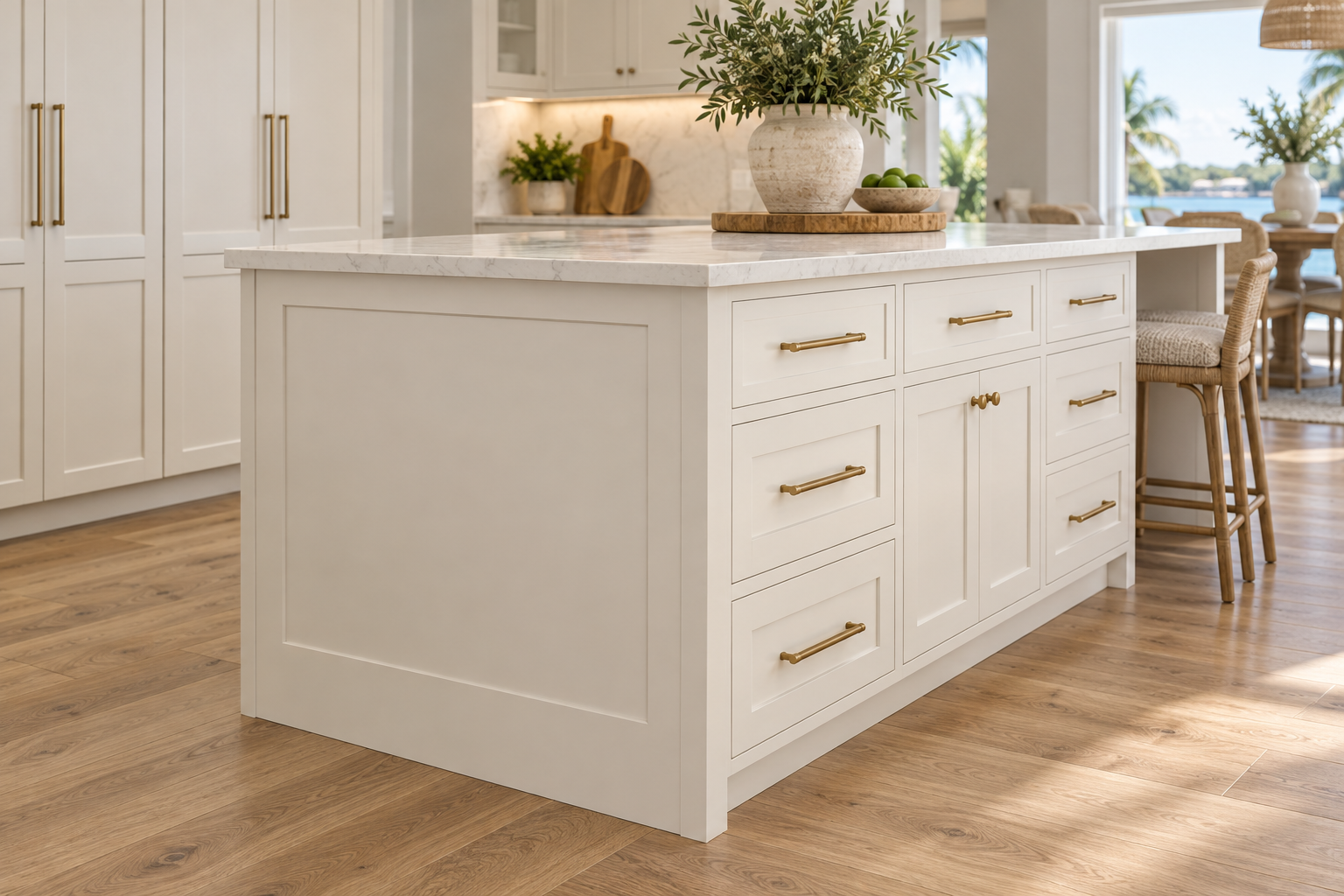
The current Simple Shaker collection page specifies matching skins for all exposed cabinet sides. Mark those sides on the layout and include the required pieces in the order. Do not assume an island end or the side beside a doorway arrives ready to display.
Ask the designer or installer to review every elevation, including the island back, refrigerator surround and tall-cabinet ends. A plan view alone may not make a missing finish piece obvious.
6. Separate RTA assembly from installation
Ready-to-assemble cabinets arrive with assembly work still to be performed. Confirm which components require assembly, what hardware is supplied, which instructions apply and who is responsible for the labor. Assembly and installation are separate tasks and should be priced accordingly.
Installation includes checking the room, establishing level reference lines, aligning and securing cabinets, fitting fillers and trim, and coordinating countertop support and appliances. A correctly assembled box does not solve an uneven wall or an incompatible appliance opening.
For a broader renovation, define who coordinates the cabinet installer with the other trades. Our remodeling contractor coordination guide explains how these dependencies fit into the project schedule.
7. Check delivery, damage reporting and warranty terms
Before ordering, confirm the delivery address, unloading arrangements, accessible route, storage space and required inspection procedure. Ask how shortages, visible damage and concealed damage must be documented and reported, and what deadlines apply. Keep cartons, labels and order records as instructed until issues are resolved.
Read the warranty for the actual manufacturer and line. The Ridgewood published warranty, for example, is limited and includes exclusions related to installation, storage and environmental conditions. That does not establish the warranty for a differently named collection. Ask what covers parts, labor, freight, removal and reinstallation, and who handles a claim.
For cabinetry delivery beyond the local remodeling area, review MDI Luxury Cabinetry’s current ordering and delivery information. Its stated delivery coverage is the continental United States. Confirm the current terms for your location before arranging installation.
8. Ask specific questions about moisture and materials
Kitchen cabinetry should be protected from leaks, prolonged moisture and unsuitable storage conditions. Follow the manufacturer’s care instructions and environmental requirements. Plywood construction does not make a finished cabinet waterproof.
For covered composite-wood products, ask for the applicable TSCA Title VI compliance information. The EPA explains that the federal formaldehyde standards cover hardwood plywood, medium-density fiberboard and particleboard, including covered materials in finished goods. Compliance is not the same as “chemical-free,” and it does not by itself substantiate a broad sustainability claim.
Request evidence for specific claims such as certified wood sourcing or an identified finish certification. Avoid making a buying decision on an undefined “eco-friendly” label alone.
9. Compare complete scopes, not just cabinet totals
Use the same layout and specifications when comparing quotes. A lower cabinet-only total may exclude the panels, accessories, assembly or installation included elsewhere.
- Confirm the manufacturer, line, profile, finish and itemized quantities.
- Review the measured plan and elevations with appliance specifications.
- Identify every exposed end, filler, trim piece and accessory.
- Separate product, freight, assembly and installation responsibilities.
- Read delivery inspection, return and warranty terms before placing the order.
- Confirm which selections must be finalized before production or shipment.
- Coordinate the cabinet schedule with the rest of the renovation.
MDI Custom Homes focuses on coordinated renovations, custom kitchens, bathrooms and whole-home improvements in Pinellas County. If cabinetry is part of a larger change in Seminole, Largo or a nearby community, discuss the renovation scope with MDI Custom Homes before finalizing the cabinet order.
Cabinet ordering questions, answered
Are hardwood cabinets always made entirely from solid wood?
No. A cabinet can combine solid-wood parts, veneered panels, plywood and other engineered components. Ask for the specifications for the box, doors, drawer fronts and drawer boxes separately.
Does soft-close hardware tell me how much a drawer can hold?
No. Soft close describes how the drawer or door closes. Verify the slide manufacturer, stated load limits, installation requirements and usable drawer dimensions separately.
Do all cabinet sides arrive finished?
No. Requirements vary by line and item. Mark every exposed side on the layout and verify the necessary end panels, skins and trim before ordering.
Can I use a Ridgewood specification for the Simple Shaker collection?
Do not assume the specifications are interchangeable. Confirm the manufacturer and collection on your current quote and use the documents supplied for that exact order.
Should I order cabinets before choosing appliances?
Finalize appliance models and obtain their installation specifications before approving the cabinet layout. Openings, ventilation and door clearances can affect the cabinet order.
Can RTA cabinets work in a high-end kitchen remodel?
They can be considered when their available sizes, construction, finishes and accessories meet the design requirements. The result also depends on a coordinated layout, careful assembly, accurate installation and complete finishing details.
Bring your project into focus.
Tell MDI Custom Homes what you want to improve, what you want to keep and what matters most. We can discuss the scope and next planning steps for your Pinellas County home.
Discuss your renovation ↗Call 727-213-7309Official resources
- MDI Luxury Cabinetry: current Simple Shaker collection
- MDI Luxury Cabinetry: ordering and delivery
- Ridgewood Cabinetry: published limited warranty
- EPA: consumer questions about composite-wood formaldehyde standards
Use the current official guidance and project-specific requirements when planning the work.
Design imagery is illustrative and does not depict completed MDI projects or exact manufacturer products.
