
Smart-home planning works best when it begins with daily life: turning on a light, managing comfort, noticing a leak or using a kitchen with your hands full. For a renovation or custom home in Seminole, Largo, St. Petersburg or elsewhere in Pinellas County, the goal is useful technology that fits the building and remains understandable to the people living in it.
Updated October 16, 2026 · MDI Custom Homes LLC · Florida Certified Building Contractor CBC1267559
Start with a task, not a collection of gadgets
List the problems you want to solve. Useful examples include a lighting scene for the main living area, a temperature schedule, an alert for unexpected moisture or a shade that is difficult to reach. Rank the benefits before choosing products.
Separate essential functions from optional conveniences. A visitor should be able to find a light switch without downloading an app. The homeowner should understand which features need an internet service, a subscription or a working hub.
| Goal | Planning question |
|---|---|
| Convenient lighting | Which circuits need local switches, dimming or coordinated scenes? |
| Comfort | Does the proposed control work with the actual HVAC equipment? |
| Water awareness | Do you need a moisture alert, flow monitoring or an approved automatic shutoff solution? |
| Connected appliances | Which app features are useful, and what remains available without them? |
| Simple daily use | Can everyone in the household operate and maintain the system? |
Connect the priorities to the broader whole-home renovation plan rather than treating each room as a separate technology purchase.
Plan smart kitchen features with the actual kitchen layout
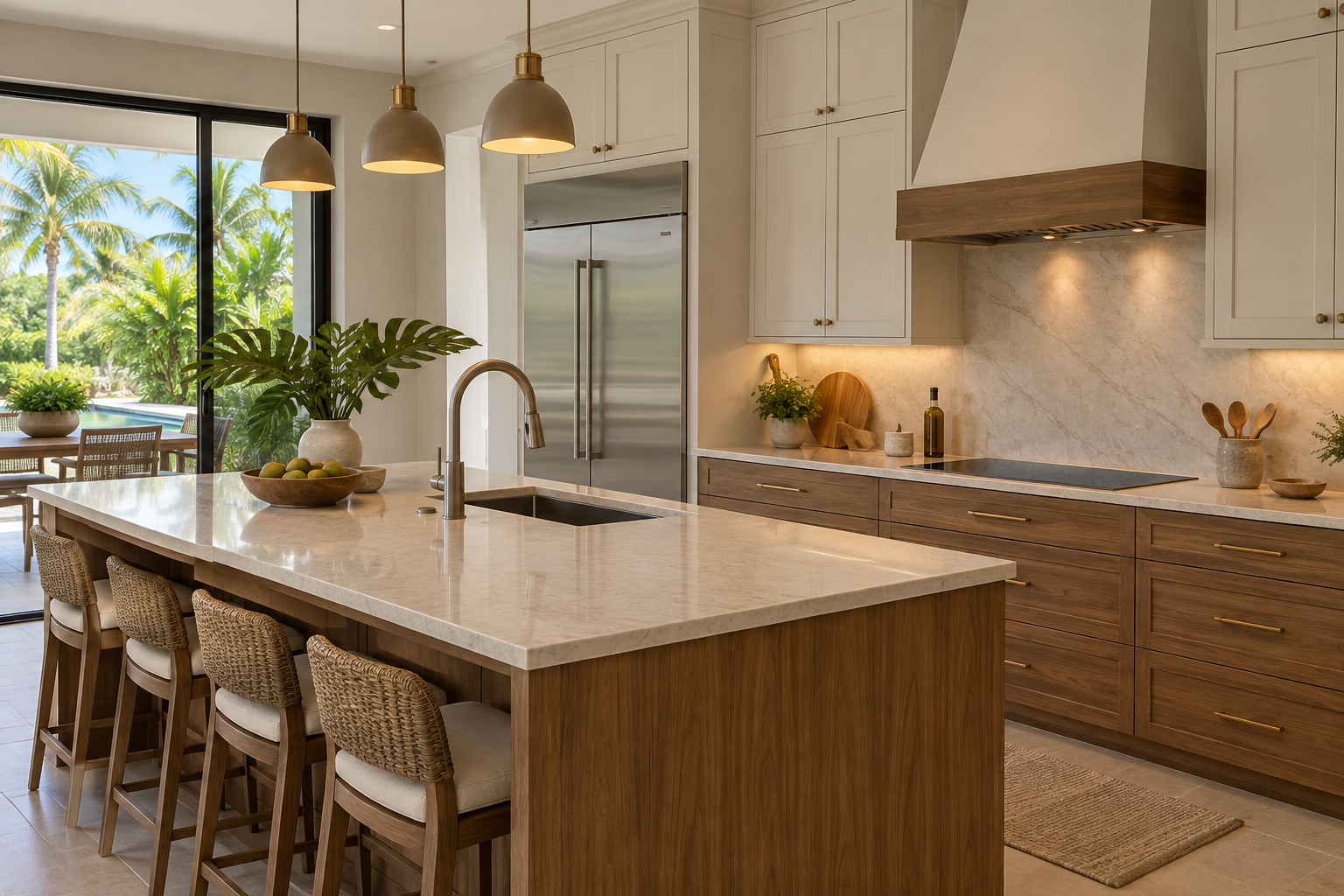
Connected appliances offer different features by model. Check the manufacturer’s current specifications instead of assuming that every appliance supports remote operation, voice commands or the same home-control platform. Follow the operating instructions and safety limitations for the exact product.
Finalize appliance dimensions, required clearances, connections and ventilation before approving cabinetry. Consider access for replacement and service as well as the day the appliance is installed. A new app feature does not compensate for a refrigerator door that cannot open fully.
For a touchless faucet, compare the physical controls, power source, maintenance requirements and operation when power is lost. Plan accessible components and avoid creating a service problem inside a crowded sink cabinet.
Coordinate task lighting, outlets, charging locations and switch positions with the way the kitchen will be used. Start with our kitchen remodeling resource and custom kitchen planning guide.
Keep bathroom technology practical and serviceable
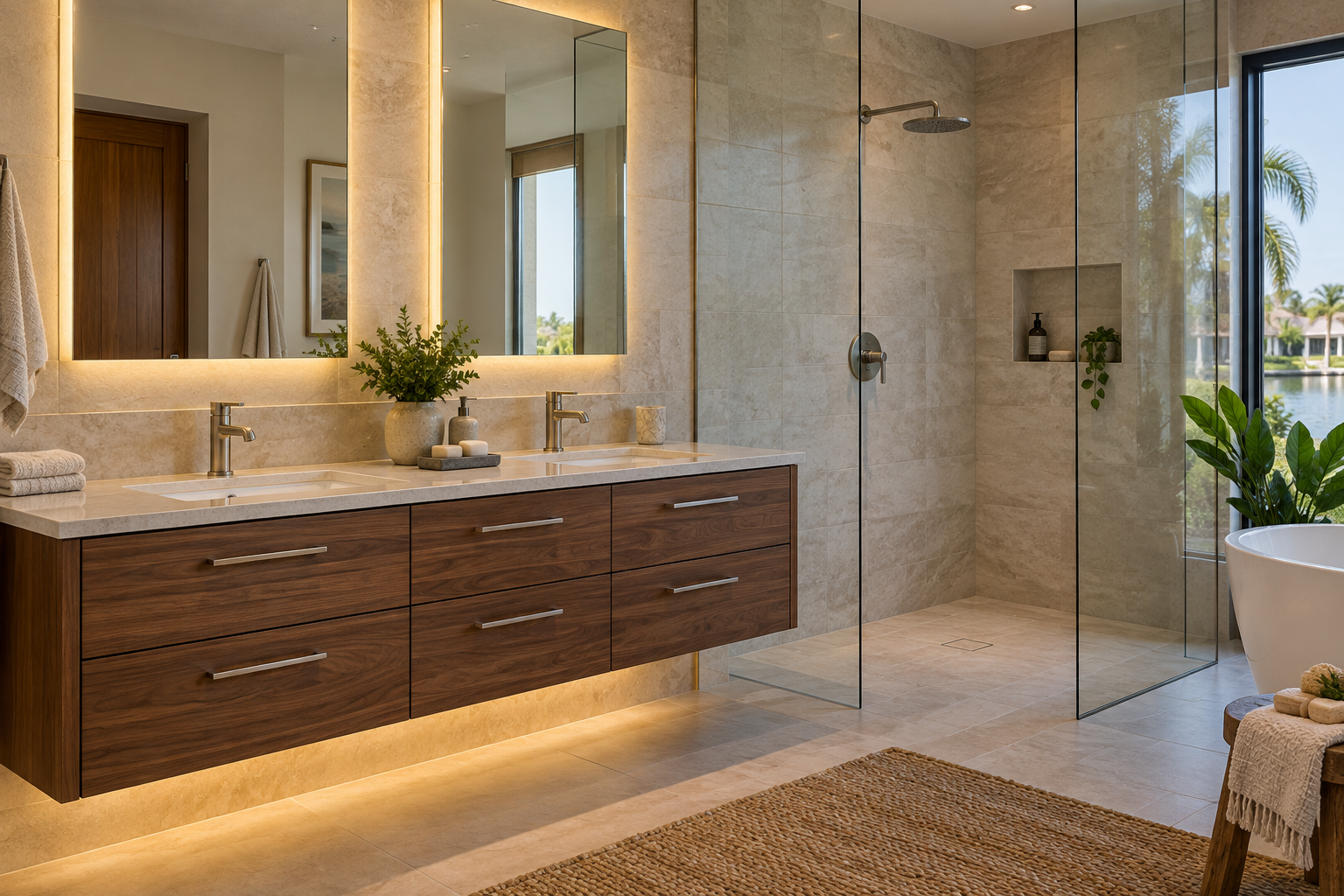
Backlit mirrors, occupancy-responsive lighting and programmable shower controls can be considered where they solve a specific need. Confirm electrical requirements, controls, maintenance access and suitability for the location with the appropriate trades and the manufacturer.
Technology does not replace the underlying bathroom work: sound plumbing, effective ventilation, waterproofing, drainage and carefully coordinated finishes. Locate controls so they are usable, and discuss how concealed components will be serviced without unnecessary demolition.
Water efficiency is a separate product attribute from connectivity or touchless operation. The EPA WaterSense label identifies eligible products independently certified for efficiency and performance. Use the official product search to check an exact listed model rather than assuming that a smart fixture qualifies.
Our bathroom remodeling guide and practical bathroom features article help connect these choices to the complete room.
Coordinate lighting, shades and comfort controls
Identify the desired scene before selecting a control: cooking, reading, entertaining or moving through the home at night. Ask the installer to verify compatibility among the fixture, driver, dimmer and control system. Keep the switching arrangement understandable.
For shades, identify power and control needs before window details are finished. Discuss access, operating preferences and what happens during a power or network interruption. Do not assume that a battery-operated product is maintenance-free.
ENERGY STAR’s smart-thermostat guidance recommends checking compatibility with the heating and cooling equipment. Have the HVAC professional review the actual system and its control needs. Certification reflects evaluated energy performance; the result in one home still depends on its equipment, use and conditions.
ENERGY STAR’s published product criteria also require basic thermostat operation when connectivity to the service provider is absent. That requirement does not mean the equipment works during a power outage.
Understand what leak detection can and cannot do
A point moisture sensor and a whole-home flow monitor answer different questions. A moisture sensor can alert to water at its location. A flow-monitoring device evaluates water moving through the system. Some products can also operate a shutoff valve; others only notify the owner.
The EPA leak-detection resource explains these technologies and their selection and maintenance considerations. Choose the approach with the plumbing professional and review its power, connectivity, placement and notification requirements.
Write down who receives an alert and what they should do. Test the system according to the manufacturer’s instructions and maintain batteries or other required components. No device should be treated as a guarantee against water damage or a replacement for fixing a known plumbing problem.
Check the complete system before ordering devices
Compatibility involves more than seeing the same word on two boxes. Confirm the exact model, supported features, controller or hub requirements, network connection and any subscriptions. Ask who is responsible for making the selected components work together.
- Power: identify hardwired, plug-in and battery-powered components and their service needs.
- Network: plan coverage and any wiring needed for the proposed locations.
- Controls: decide which functions remain local and which depend on an app or remote service.
- Support: review updates, warranty, replacement options and ongoing fees.
- Integration: document the functions actually promised, not a vague claim that everything is connected.
Assign electrical, plumbing, HVAC and integration responsibilities clearly. Review the proposed work and any required approvals before installation. Our design coordination resource and scope-definition guide can help organize those decisions.
Include account ownership and privacy in the plan
The owner should control the household accounts and understand who has access. Use unique passwords, enable two-factor authentication where available and keep devices updated. Review microphones, cameras, recording settings and data-sharing options before enabling features you do not need.
The Federal Trade Commission’s connected-device guidance recommends securing both the router and individual devices. Its home Wi-Fi guidance addresses network encryption and router administration.
Agree on installer access during setup and how it ends at handoff. Do not put account passwords in publicly shared project documents. Ask how a device and its account access are removed when the equipment is replaced or the home changes ownership.
Test normal use and failure conditions before closeout
Request a walkthrough that demonstrates the functions included in the scope. Test a normal routine, local controls and the documented behavior when connectivity is unavailable. Confirm that household members can operate the equipment and find the instructions.
| Handoff item | What the owner should receive |
|---|---|
| Equipment record | Models, locations, manuals and warranty information |
| Control guide | Basic operation, local controls and agreed scenes |
| Account access | Owner-controlled setup and a clear record of authorized access |
| Maintenance | Battery, update, testing and service requirements |
| Support | Who handles construction, device and integration questions |
The FTC’s smart-home transfer guidance explains why connected devices need attention when ownership changes. Keep that future transition in mind from the initial setup.
For a remodel or custom residential project, bring your room priorities and desired functions to MDI Custom Homes. We can discuss how the construction scope and the relevant trades should be coordinated. Use our project-closeout guide for the broader completion checklist.
Smart-home planning questions
Do all smart-home features need the internet?
No. Requirements differ by device and function. Confirm which controls work locally and which need a hub, internet connection, account or subscription.
Can smart kitchen features be added during a remodel?
Yes, when the selected equipment fits the layout and its power, connection, clearance and service requirements are coordinated. Decide before cabinetry and related rough work are finalized.
Does a touchless faucet automatically save water?
Touchless operation and water efficiency are different features. Review the exact product’s specifications and applicable efficiency certification rather than assuming one guarantees the other.
Will a smart thermostat work with any air conditioner?
No. Check compatibility with the actual equipment and control requirements before purchasing. Have the HVAC professional confirm the proposed solution.
Can a leak sensor prevent every water-damage event?
No. Devices differ in what they detect and whether they can shut off water. Proper selection, installation, testing and a response plan matter.
Should a smart home still have physical controls?
Plan understandable local controls for basic functions wherever the chosen system supports them. Document what happens during internet, device or power interruptions.
Who should own the smart-home accounts?
The homeowner should control the household accounts and understand authorized access. Resolve installer access, updates, support and future transfer during handoff.
Bring your project into focus.
Tell MDI Custom Homes what you want to improve, what you want to keep and what matters most. We can discuss the scope and next planning steps for your Pinellas County home.
Discuss your renovation ↗Call 727-213-7309Official resources
- FTC: securing internet-connected devices
- FTC: securing a home Wi-Fi network
- FTC: buying or selling a smart home
- ENERGY STAR: smart thermostats
- ENERGY STAR: smart thermostat criteria
- EPA: leak detection and flow monitoring
- EPA: the WaterSense label
- EPA: WaterSense product search
Use the current official guidance and project-specific requirements when planning the work.
Design imagery is illustrative and does not depict completed MDI projects or exact manufacturer products.
