
Before hiring a contractor for a Tampa renovation, confirm more than a name and a license number on a proposal. Establish who is contracting with you, whether the license fits the work, who is responsible for permits and how the job will be documented. This guide separates those checks so homeowners can make a more informed decision about kitchens, bathrooms, whole-home renovations, additions and new construction.
Updated October 15, 2026 · MDI Custom Homes LLC · Florida Certified Building Contractor CBC1267559
Match the license to the business on the proposal
Start with the exact business name, the contractor’s name and the license number. Use Florida DBPR’s official verification resources to review the current record. Check the license type, status and business association rather than relying on a screenshot or a number printed on a truck.
DBPR explains that a construction business must be qualified by a properly licensed individual. Review the business and individual records together. The business entering the agreement should match the business you verified; a different company with a similar name is not interchangeable.
Keep the relevant details with the proposal and clarify mismatches before approving work. Ask who is authorized to discuss scope, sign documents and communicate about the project. A clear business identity is the starting point for all the other records you will review.
Confirm the credential fits the work
“Licensed contractor” is not one universal permission to perform every kind of construction. The City of Tampa’s construction FAQ states that a contractor can perform only the work within the scope of the license. Confirm the appropriate license category and trade responsibilities for your actual project.
A kitchen renovation may include cabinetry as well as electrical, plumbing, ventilation or structural work. A bathroom renovation may connect fixture relocation, waterproofing, ventilation, electrical work and finishes. Describe the whole scope when asking which approvals and qualified trades are required.
Some finish work may not require a state construction license. DBPR directs consumers to the local building department to check applicable requirements. Do not assume either that every small task requires the same credential or that a project is exempt because one part is cosmetic.
Useful question: “Which parts of this scope will your company perform, which will be handled by other trades, and who verifies that each party is qualified for that work?”
Review insurance separately from licensing
A license lookup is not a complete insurance review. Request current general liability information and appropriate workers’ compensation documentation, then clarify the named business, effective dates and relevant coverage questions with the insurance professional providing the information. A certificate summarizes information; it should not be treated as a promise that every possible loss is covered.
Florida’s Division of Workers’ Compensation explains the construction-industry coverage requirements and the contractor’s responsibility to verify required subcontractor coverage. Exemptions apply to eligible individuals under specific conditions; they are not a blanket substitute for coverage of everyone working on a project.
Ask how the contractor checks the documentation for the subcontractors assigned to your job and how changes in the team are handled. Our Florida subcontractor workers’ compensation resource explains the distinctions in more detail.
Discuss your own property coverage with your insurance professional before the renovation begins, especially if the home will be unoccupied or the work materially changes its condition. Project-specific coverage questions need a review of the actual policies and work.
Identify the permitting authority and responsible parties
A Tampa mailing address is not enough to identify the approval path. Confirm which building and zoning authorities serve the property. The City of Tampa Construction Services Division administers building permits and inspections for property development within the city; other addresses may fall under a different jurisdiction.
For work requiring permits, establish who prepares the application, supplies drawings, responds to review comments and holds responsibility for the permit. Identify related trade permits and any design professionals needed for the scope. Ask how the homeowner will receive the permit number and access status information.
Do not substitute “we have done this before” for a property-specific determination. Changes to structure, openings, systems or use can affect the approval requirements. Review the general process in our renovation permit guide, then confirm the applicable requirements with the authority serving your address.
The city’s forms and documents library provides current application guides, contractor-registration information and other resources. Use the current form when it is needed rather than an old copy from another project.
Turn the proposed renovation into a clear written scope
Licensing establishes a credential; the agreement establishes what the contractor is undertaking for you. Compare proposals against the same scope, drawings and selections. Identify demolition, preparation, construction, products, finishes, protection, cleanup and closeout. Record exclusions and owner-supplied items explicitly.
Distinguish selected products from allowances. Ask what each allowance covers and how the final choice affects cost and timing. For concealed conditions, establish how discoveries will be assessed, documented and approved. A broad label such as “complete kitchen” is less useful than a scope showing its actual components.
Define how proposed changes are communicated and approved, including their cost and schedule effects. Keep those decisions with the current drawing set. Our scope and cost-control guide explains why a clear description is central to comparing prices and managing changes.
Ask for references from projects with similar work, not just a gallery of attractive rooms. Discuss communication, coordination, how problems were handled and whether closeout was completed. A license check and a relevant experience review answer different questions.
Check coordination during construction
Identify the project’s main contact and who supervises the site. Discuss how the contractor coordinates trades, orders materials, protects occupied areas and communicates upcoming decisions. A useful schedule connects tasks to approvals, product availability and preceding work.
For permitted work, track the required inspections and any corrections. Tampa’s construction FAQ explains that work requiring a permit must receive the applicable inspections and final approval. Confirm the actual inspection requirements with the responsible authority, and keep inspection records connected to the project.
Required inspections and the contractor’s quality review have distinct roles. The team should also compare installed work with the agreed scope, approved selections and current drawings. Discuss discrepancies early, before later work makes them harder to assess.
Our resources on schedule and site supervision, inspection coordination and subcontractor roles explain how those responsibilities fit together.

Define what a completed project includes
Agree on the closeout process before the project reaches its last days. Walk through the work against the scope, record remaining items and identify the responsible party for each. Confirm the status of required inspections and approvals; a finished appearance alone does not establish permit completion.
Collect equipment instructions, product information, finish selections, warranty documents and relevant approval records. Ask how service concerns should be reported and what the written warranty covers. Do not assume every contractor or product offers the same terms.
Use our final inspections and closeout resource to organize this stage. For a first contractor conversation, the questions to ask a Florida builder provide another practical checklist.
MDI Custom Homes LLC is a Florida Certified Building Contractor, CBC1267559, based in Pinellas Park. Our focus is high-end kitchens, bathrooms, whole-home renovations and custom interiors, with additions and new construction also available. Share your property location and project scope to discuss fit and availability.
Contractor verification questions
Does a contractor’s license guarantee quality work?
No. Licensing is an important credential, but you should also review relevant experience, the written scope, project coordination, inspection responsibilities and closeout procedures.
Should the contractor’s business name match the proposal?
Verify the business entering the agreement and the licensed individual who qualifies it. Resolve differences between the proposal and official records before approving the work.
Is a license number proof of current insurance?
No. Review current insurance information separately and clarify coverage questions with the relevant insurance professional. Check workers’ compensation documentation for the actual parties involved.
Does every Tampa address use City of Tampa permitting?
No. Confirm the jurisdiction serving the actual property. A mailing address or a broad Tampa Bay location should not be used alone to decide which authority handles approvals.
Bring your project into focus.
Tell MDI Custom Homes what you want to improve, what you want to keep and what matters most. We can discuss the scope and next planning steps for your home.
Discuss your renovation ↗Call 727-213-7309Official resources
- Florida DBPR: how to verify a license
- Florida DBPR: qualified construction business information
- City of Tampa: Construction Services
- City of Tampa: construction questions and answers
- Florida Division of Workers’ Compensation: coverage requirements
Use the current official guidance and project-specific requirements when planning the work.
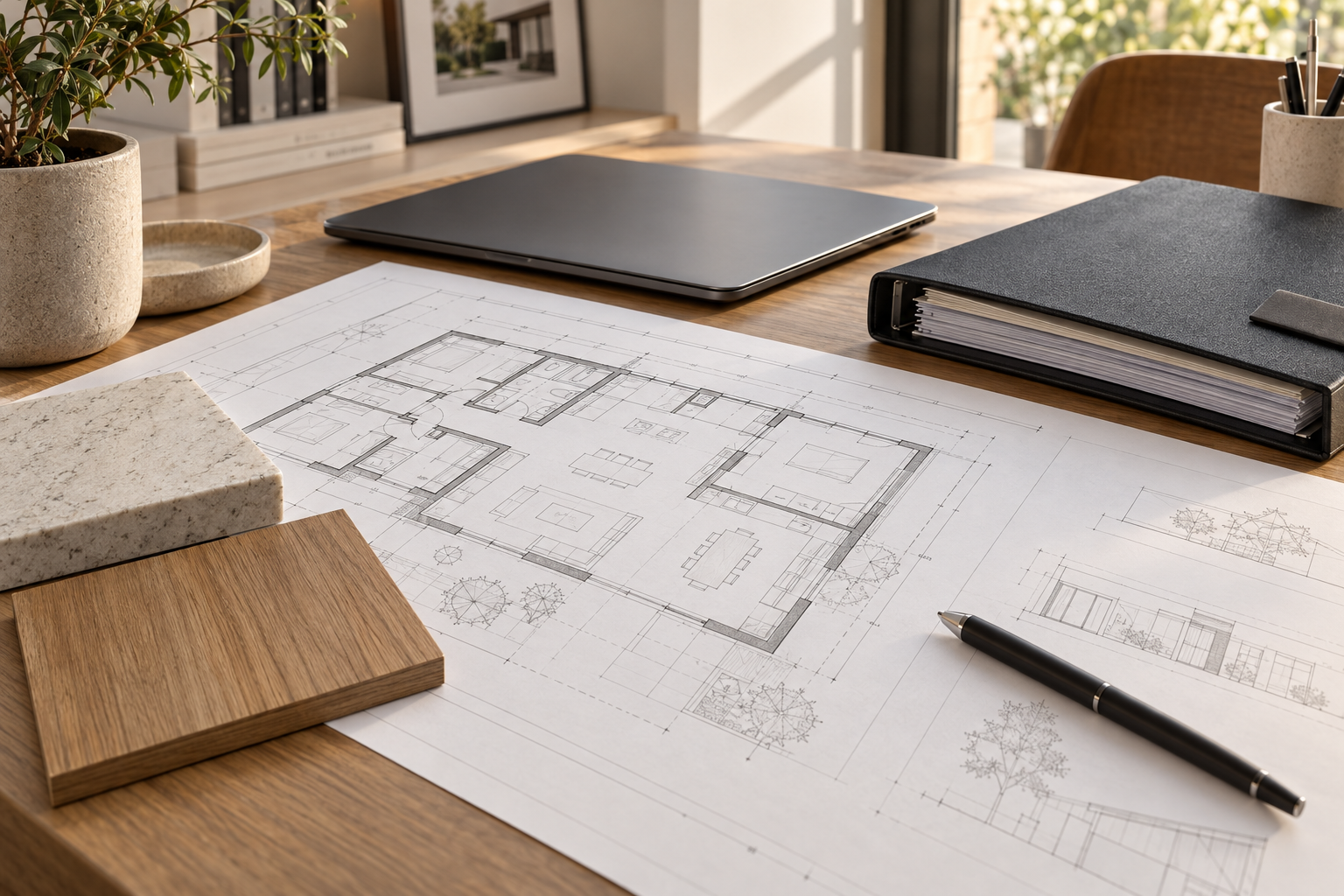
Design imagery is illustrative and does not depict completed MDI projects.
