
A kitchen cabinet upgrade should solve a real problem without creating unnecessary work. In Clearwater Beach and across Pinellas County, that may mean keeping sound cabinets, improving their operation and refreshing selected finishes. The seven options below explain what to evaluate before spending money—and when a larger cabinet replacement or remodel deserves a closer look.
Updated October 16, 2026 · MDI Custom Homes LLC · Florida Certified Building Contractor CBC1267559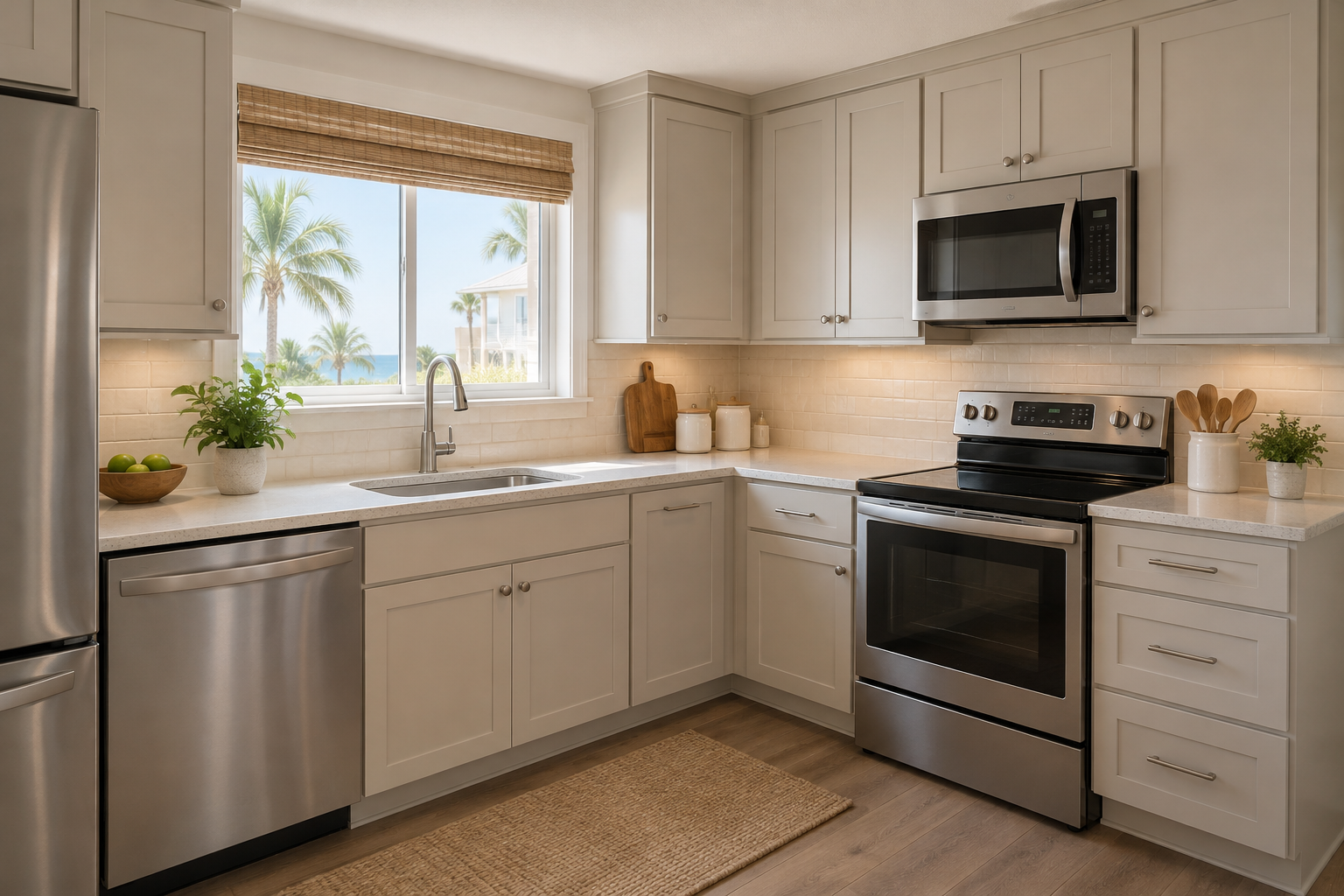
1. Correct alignment and worn hardware first
Open every door and drawer before choosing a finish. Note rubbing edges, loose pulls, uneven gaps, sticking drawers and areas where mounting screws no longer hold securely. Identify whether the problem is an adjustment, a worn component or damage to the cabinet itself.
A compatible hinge or slide replacement may improve a serviceable cabinet. Check the cabinet construction, door overlay, mounting pattern, clearances and manufacturer instructions before buying hardware. Soft-close products are not universally interchangeable. For example, Blum’s hinge range includes different applications and configurations; the correct product depends on the cabinet.
Make a sample repair and check its operation before ordering parts for the whole kitchen. If the substrate is deteriorated or the cabinet is insecure, resolve that condition rather than simply adding a stronger hinge. Our cabinet quality guide explains what to examine beyond the door style.
2. Replace knobs and pulls with a measured plan
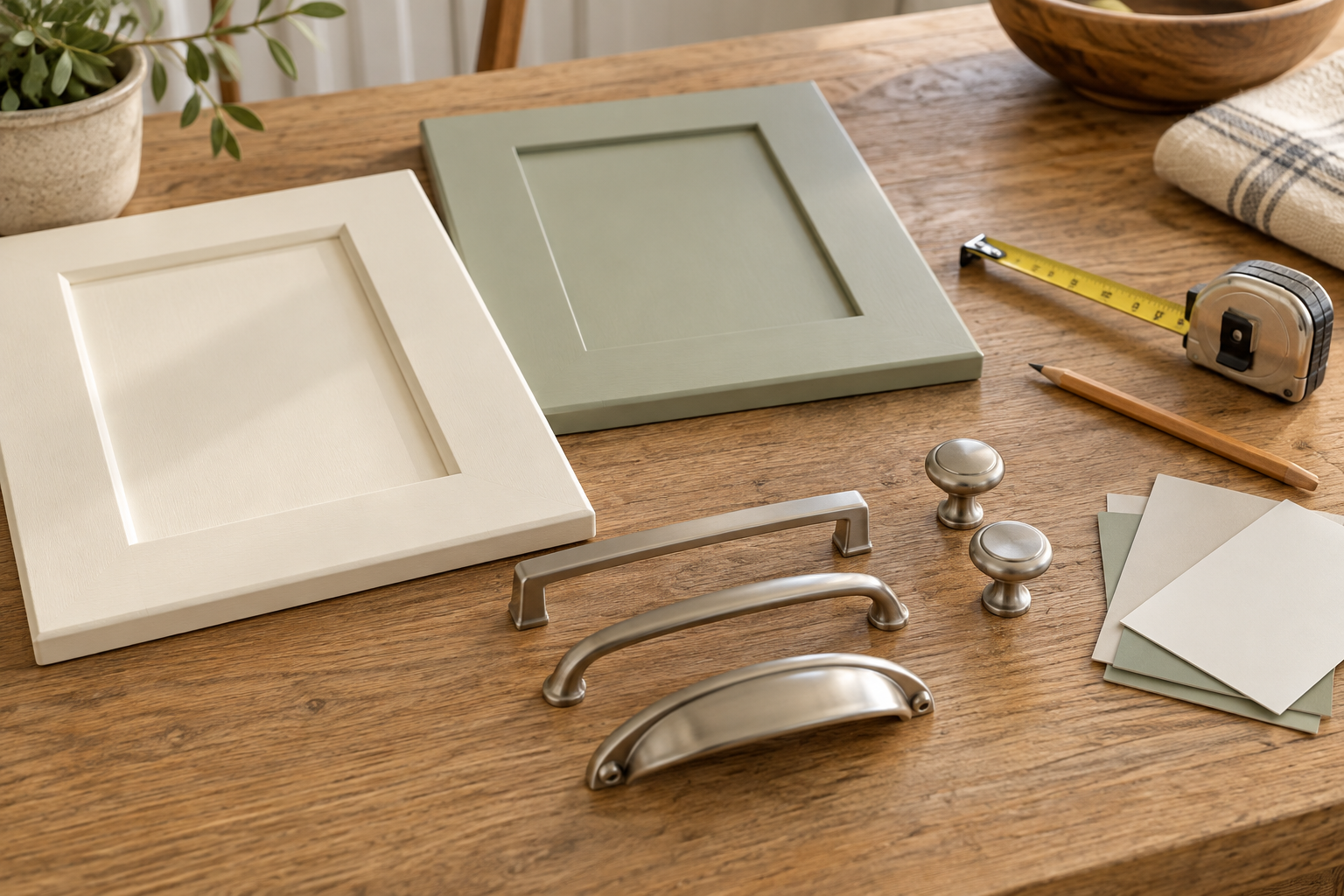
Hardware is a relatively contained upgrade when the existing finish and mounting locations can remain. Count each knob and pull, measure the center-to-center spacing between existing screw holes and check door or drawer thickness. Overall pull length and hole spacing are different measurements.
Test a sample on a frequently used door and drawer. Check finger clearance, comfortable grip, projection into walkways and interference with adjacent fronts or appliances. Use screws suited to the hardware and material thickness; confirm the manufacturer’s requirements.
Choosing the same hole spacing can limit patching, but a smaller base may expose marks left by the original hardware. Moving a pull can require filling, surface preparation and finish repair. Include that work in the comparison instead of treating the hardware purchase price as the whole cost.
3. Refinish or repaint cabinets that are suitable to keep
A finish change is most useful when the boxes, doors and layout remain sound. Identify the actual surface: solid wood, veneer, a painted coating, laminate and wrapped fronts can require different preparation and products. Do not assume every door will accept the same paint system.
Sherwin-Williams’ cabinet painting guidance emphasizes cleaning and testing adhesion before proceeding with the full surface. Use the current instructions for the selected primer and coating, including preparation, drying and return-to-service requirements. A sample should demonstrate the appearance and bond before the whole kitchen is committed.
For an older home, address possible lead paint before sanding or disturbing existing coatings. The EPA recommends lead-safe certified help for renovation work in pre-1978 homes. Confirm the applicable assessment and work practices before preparation begins.
Compare complete refinishing proposals: removal and labeling, cleaning, repairs, protection, coating, reinstallation and adjustment. Review our cabinet materials and finishes guide for questions to ask about the underlying construction.
4. Compare replacement fronts or refacing with full replacement
Replacement doors and drawer fronts can change the appearance while retaining suitable boxes. Refacing generally also addresses visible cabinet-box surfaces. Ask the provider to define exactly what its proposal includes, because those terms do not describe one universal package.
Measure each opening and confirm overlay or inset requirements, hinge locations, drawer-front attachment and clearances. Include exposed ends, fillers, toe kicks and trim in the finish plan. A new door sample alone does not show how all the retained surfaces will look together.
This approach deserves comparison when the existing layout works and the retained components justify the investment. If you also need major layout changes, extensive repairs or new storage configurations, obtain a complete replacement comparison. Our cabinet quote comparison guide helps identify omissions that can distort the totals.
5. Add storage that fits the items and the cabinet
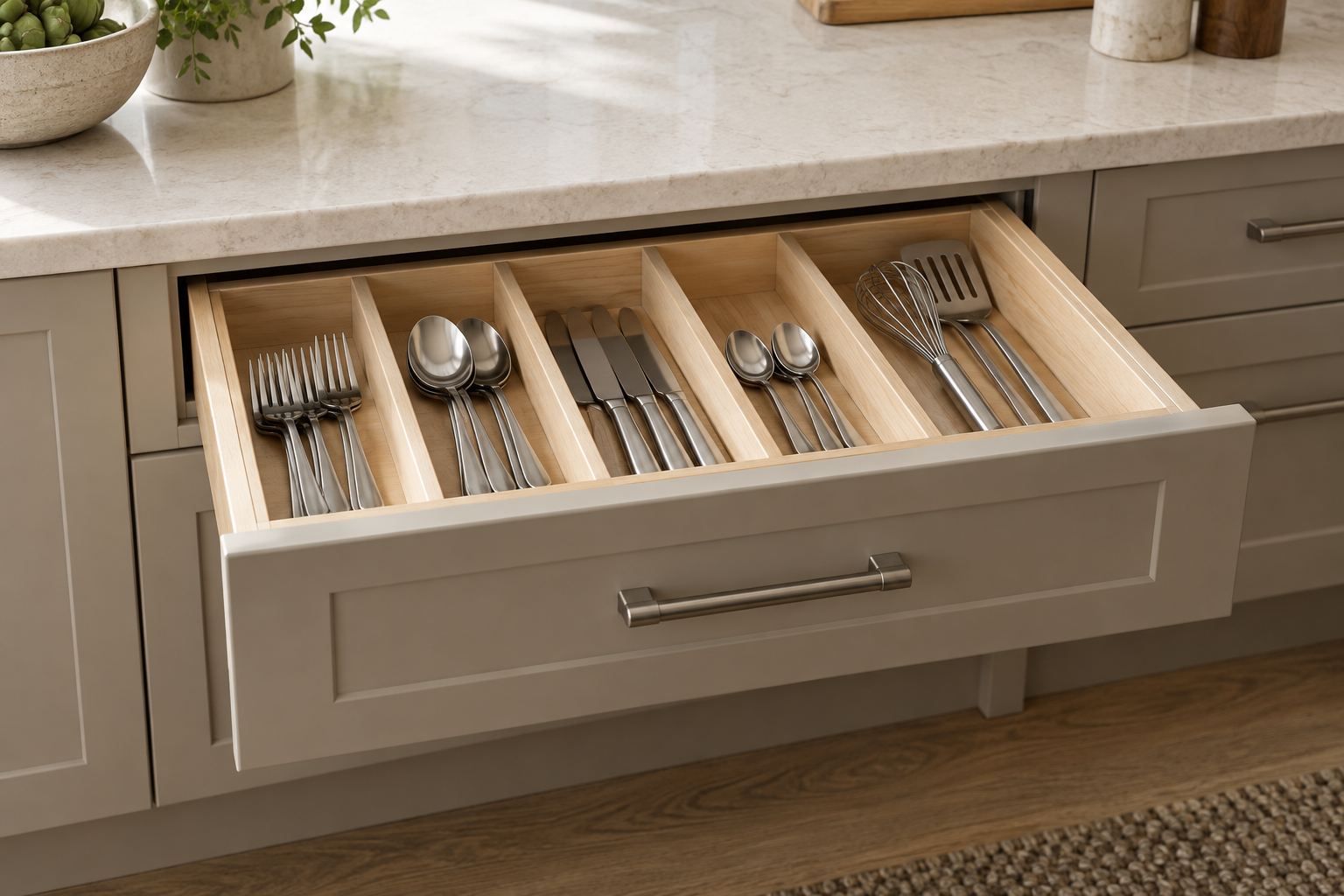
Start with the objects that are difficult to reach or organize. A cutlery insert, tray divider, adjustable shelf or suitable pull-out may solve a specific problem without rebuilding the kitchen. Measure the clear interior opening, depth and available height, not just the outside cabinet width.
Account for hinges, face frames, plumbing and other obstructions. Check the accessory’s mounting requirements, operating clearance and stated load limits. A pull-out that fits inside the box may still collide with a partially open door. Dry-fit or verify a representative unit before repeating it.
Reserve the most convenient storage for items used frequently. Do not buy accessories solely to fill every cabinet. Our small-kitchen planning guide considers access and circulation together, which helps distinguish a storage problem from a layout problem.
6. Coordinate under-cabinet task lighting
A useful cabinet refresh can improve the work surface as well as the cabinet fronts. Review where shadows fall while preparing food, then consider lighting placement, glare and the appearance of the light on the countertop and backsplash.
Compare the complete system: fixtures, drivers or power supplies, controls, wiring path, access for maintenance and any trim needed to conceal it. Confirm that the components are compatible and installed according to their instructions. Have an appropriately qualified professional evaluate hardwired electrical changes and applicable permit requirements.
Test the light with actual finish samples when possible. Avoid choosing color or brightness from a small product photo alone. If new electrical work or backsplash repair is involved, include both in the scope. Our kitchen remodeling resource explains how related decisions fit into a coordinated project.
7. Finish exposed ends and trim with a coherent design
A carefully detailed end panel, filler, toe kick or crown treatment can make retained cabinetry look more intentional. First confirm which edges are unfinished and what the existing cabinet construction can support. Check ceiling variation and adjacent walls before selecting a profile.
Keep trim proportionate to the room and door style. A larger molding is not automatically a better result, and trim should not obstruct door operation, ventilation or access to equipment. Confirm attachment methods and the finish on visible cut edges.
Get a sample or drawing of the proposed detail and identify every piece in the quote. Painting or finishing labor, corner returns and installation can matter as much as the material. See our custom trim and molding guide for a broader approach to consistent interior details.
Choose the scope before committing the budget
Make a short list of what must improve, what is already working and what you expect to change later. Avoid investing heavily in a finish you will remove for a planned layout change. Use the following checks to compare options without assuming a universal price or savings percentage.
| Existing condition | Useful next step |
|---|---|
| Sound cabinets and an effective layout | Compare targeted repairs, hardware, finish and storage improvements. |
| Sound boxes but unsuitable fronts | Compare a fully specified front replacement or refacing scope with new cabinets. |
| Water damage, failing attachments or deteriorated components | Resolve the cause and assess what can reasonably be retained before cosmetic work. |
| Poor circulation or major appliance changes | Review the layout and complete remodeling scope before purchasing upgrades. |
Request an itemized proposal with the quantities, products, preparation, installation, exclusions and handling of discovered conditions. For a staged project, make sure the first phase will not need to be undone during the second. Our scope and cost-control resource explains how to make those decisions explicit.
Decorative film and open shelving can suit particular goals, but neither is a universal substitute for durable cabinet work. Confirm surface compatibility, care needs, storage tradeoffs and any landlord permission before choosing a temporary treatment. A larger feature wall belongs in a separate scope comparison; it should not be presented as an automatically inexpensive refresh.
MDI Custom Homes can discuss how cabinet work fits into your Clearwater Beach or Pinellas County remodeling project. If replacement is appropriate, explore MDI Luxury Cabinetry and our cabinet project planning guide. For an assessment of the broader project, contact MDI Custom Homes with photographs, approximate dimensions and your priorities.
Kitchen cabinet upgrade questions
What is the best first cabinet upgrade on a limited budget?
Identify the most important problem first. On sound cabinets, an adjustment, compatible hardware repair or better organizer may address daily use before a larger finish investment. Compare the complete scope for your kitchen rather than relying on a universal lowest-cost claim.
Can I reuse the holes when replacing cabinet pulls?
Often, if the new pull has the same center-to-center mounting spacing. Also check its base coverage, projection, grip clearance and screw requirements. Matching overall length alone is not enough.
Is repainting always cheaper than replacing cabinets?
No universal comparison is reliable. Preparation, repairs, coating work and reinstallation can materially affect a refinishing quote. Compare the full scope and the condition and usefulness of the cabinets you would keep.
Can soft-close hardware be added to any cabinet?
Compatibility must be checked. Cabinet construction, door overlay, mounting geometry, clearances and the selected manufacturer’s requirements determine whether a particular hinge, slide or accessory is suitable.
When should I consider cabinet replacement instead of a refresh?
Consider a complete comparison when the boxes are damaged, the layout no longer works or several major components need changing. Address moisture or attachment problems before covering them with new finishes.
Do these upgrades require a full kitchen remodel?
Many focused upgrades can retain the existing kitchen layout. Work affecting electrical systems, plumbing, structure or other related components needs its own coordination and any required approvals. Define that scope before ordering materials.
Bring your project into focus.
Tell MDI Custom Homes what you want to improve, what you want to keep and what matters most. We can discuss the scope and next planning steps for your Pinellas County home.
Discuss your renovation ↗Call 727-213-7309Official resources
- Sherwin-Williams: cabinet painting preparation and adhesion
- Blum: hinge applications and configurations
- EPA: lead-safe renovation guidance
Use the current official guidance and project-specific requirements when planning the work.
Design imagery is illustrative and does not depict completed MDI projects or exact manufacturer products.
